

Have you ever stopped to wonder why some aluminum pergolas can stand elegantly for over a decade—surviving severe coastal winds and heavy snow loads without a scratch—while others start sagging, peeling, or rattling after just a few seasons?
As a manufacturer or product development manager, has it ever hit you that the fine line between a premium, market-leading product and a warranty nightmare is drawn on day one of choosing your extrusion profiles?
With a market flooded with various aluminum grades and wildly fluctuating quotes, how do you choose the right aluminum for pergola production? More importantly, why is cutting corners on material costs a recipe for disaster?
This comprehensive guide delivers a step-by-step framework for aluminum pergola material selection. By the end of this article, you will master the exact alloy grades, wall thickness engineering, and surface treatment standards required to ensure every dollar of your manufacturing budget yields maximum return.
3. Core Material Selection Principles: Balancing Strength, Extrudability, and Aesthetics
Manufacturing a pergola means building an architectural outdoor structure. Your material strategy must strictly satisfy three non-negotiable pillars:
- Structural Integrity (Load Capacity): The pergola must withstand local wind loads (including gale-force winds) and winter snow accumulation while suspended.
- Excellent Extrudability (Complex Profiles): Modern bioclimatic pergolas feature complex, hollow cross-sections like motorized tilting louvers, internal gutter systems, and integrated LED tracks. The alloy must be malleable enough to handle intricate extrusion dies.
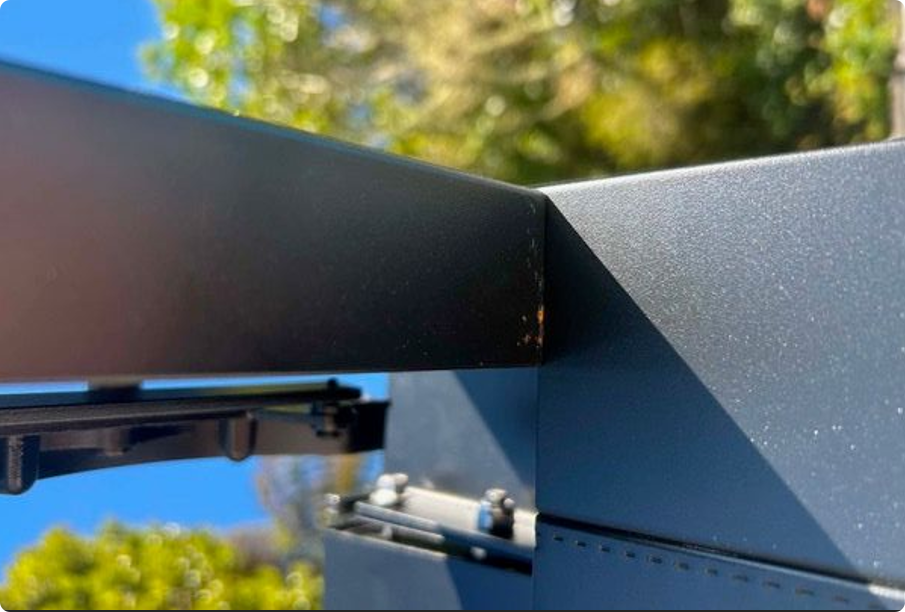
- Outdoor Weatherability (Aesthetic Longevity): Constantly exposed to UV rays and rain, the aluminum substrate must perfectly bond with high-tier surface finishes to prevent chalking, peeling, or oxidation.
To satisfy all three pillars, 6000-series (Al-Mg-Si) aluminum alloys are the industry standard. Specifically, 6063-T6 serves as the cost-effective backbone of the industry, while 6061-T6 acts as the heavy-duty structural muscle.
4. Component-Based Guide: Matching Alloys to Pergola Anatomy
Different parts of an aluminum pergola experience entirely different stress concentrations and operational demands. A one-size-fits-all approach to material specifications will either lead to structural failure or massive over-engineering.
Component A: Main Posts & Long-Span Beams
- Application: The “skeleton” of the pergola, which bears heavy vertical loads and horizontal shear forces from wind.
- The Right Choice: For standard residential sizes (spans under 4 meters), 6063-T6 provides excellent performance. However, for commercial projects, massive spans (over 6 meters), or coastal hurricane zones, upgrading the main beams and pillars to 6061-T6 is highly recommended to prevent structural deflection.
Component B: Motorized Tilting Louvers (Roof Blades)
- Application: Louvers must rotate smoothly, meaning they need to be lightweight to reduce motor fatigue, yet rigid enough to prevent mid-span sagging.
- The Right Choice: 6063-T6 is mandatory here. Its superior extrudability allows manufacturers to produce intricate, thin-walled profiles that incorporate weather-stripping grooves and interlocking driving mechanisms in a single extrusion pass.
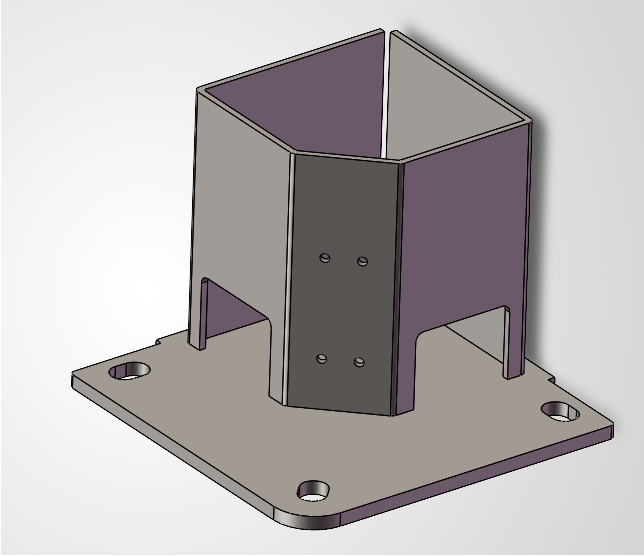
Component C: Brackets, Connectors, and Drive Components
- Application: The highest stress concentration points of the entire structure.
- The Right Choice: Utilize CNC-machined 6061-T6 aluminum components or high-grade stainless steel (SUS304) to prevent structural shearing.
5. Actionable Quality Benchmarks: The Procurement Checklist
When negotiating with extrusion mills or conducting Quality Control (QC) inspections, look past the alloy stamp and enforce these strict engineering metrics:
- Enforce Minimum Wall Thickness (No Exceptions):
- Pillars/Posts: Must range between
2.5mm - 4.0mm. Anything under 2.5mm significantly increases structural sway during high winds. - Main Beams: Keep between
2.5mm - 3.5mm. Internal screw ports and tracking channels must be reinforced. - Louvers/Blades: The sweet spot is
1.5mm - 2.0mm. Going thinner causes the blades to bow under snow loads; going thicker strains the motor and drive system.
- Pillars/Posts: Must range between
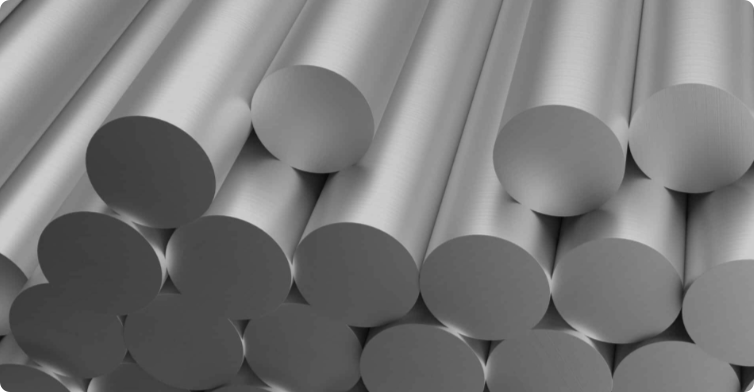
- Verify Raw Ingot Quality (Zero Scrap Policy): Explicitly state in your procurement contracts that the mill must use A00 primary aluminum ingots (or certified virgin 6063 logs). Avoid recycled “scrap” aluminum, which contains high impurity levels that ruin surface finishes and cause micro-cracking under cyclic wind stress.
6. Advanced Engineering: What Separates Premium Manufacturers from the Rest
To command a premium price in international markets like North America and Europe, you need to understand the deeper technical nuances of aluminum metallurgy:
Precision T6 Tempering
The “T6” designation signifies that the alloy has been solution heat-treated and artificially aged. To hit peak yield strength, the extrusion mill must control the quench rate instantly as the profile exits the die, followed by precise soaking times in the aging oven. Substandard aging yields soft aluminum that warps easily, even if it is technically labeled 6063.
Eliminating Galvanic Corrosion
A fatal mistake made by novice manufacturers is using standard carbon steel screws in direct contact with aluminum. In humid or coastal salt-air environments, this creates a galvanic cell, causing the aluminum to corrode rapidly around the fastening points. The Fix: Exclusively use stainless steel hardware and insert non-conductive isolation washers (like nylon or EPDM) between dissimilar metals.
Architectural-Grade Powder Coating Standards
Standard outdoor powder coatings fail within 2–3 years under intense UV exposure. High-end pergola manufacturing demands architectural-grade, ultra-durable powders, such as AkzoNobel (Interpon) or Tiger Drylac. Additionally, ensure the pre-treatment line utilizes a high-standard chrome-free conversion coating to guarantee maximum paint adhesion.
7. Frequently Asked Questions (FAQ)
Q: Since 6061-T6 is significantly stronger, why not manufacture the entire pergola out of it?
A: It comes down to cost efficiency and geometric limitations. 6061 alloy is more expensive due to its higher alloying elements. More importantly, it is much harder to extrude into the complex, thin-walled, multi-cavity shapes required for louvers and gutters. It also yields a slightly rougher surface finish compared to the pristine, smooth face of 6063. A hybrid approach yields the best ROI.
Q: How can I visually detect if a supplier is using recycled aluminum instead of virgin ingots?
A: Inspect raw, unpainted profiles. Virgin aluminum profiles feature an incredibly uniform, smooth grain texture. Recycled aluminum often shows subtle surface streaks, microscopic pits, or structural inclusions. Once powder-coated, recycled aluminum is more prone to an inconsistent “orange peel” texture.
Q: How do I increase the structural wind-load rating of a large pergola without exponentially increasing material costs?
A: Instead of simply thickening the exterior walls of the profile (which drastically increases weight and cost), optimize the internal geometry. Designing internal ribs, cross-braces, or multi-hollow chambers within the extrusion profile increases the section modulus, vastly improving torque and bending resistance with minimal extra aluminum.
8. Ready to Build a Market-Leading Pergola Product Line?
Choosing the right aluminum alloy and profile engineering is the foundation of capturing the premium outdoor living market.
If you are currently developing a new bioclimatic pergola project and need expert guidance on die-drawing optimization, structural wall thickness calculations, or international surface treatment certifications, we are here to help.
[Contact our engineering team today] to schedule a 1-on-1 technical consultation. Let’s design a high-performance, cost-optimized extrusion profile that sets your brand apart.