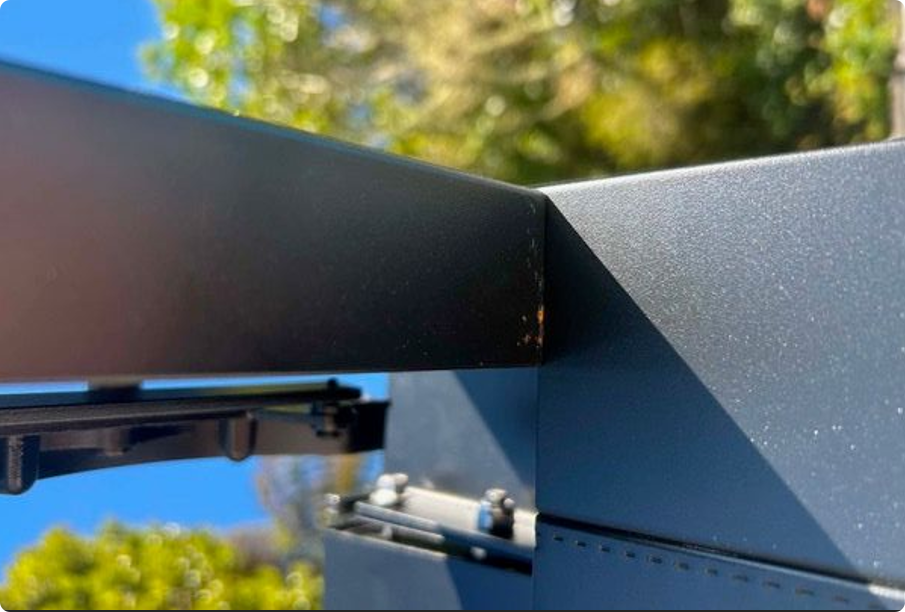


Why do some aluminum pergolas, proudly rated to withstand Category 5 hurricanes (150+ mph), start to rattle, make strange noises, or even suffer snapped connectors after less than two years in Florida or the Caribbean? Have you ever had that sudden realization that what destroyed the pergola wasn’t the fierce wind itself, but the salt spray and humid heat carried within it?
When discussing wind safety, we usually only focus on “wind load.” However, in Coastal High Corrosion Zones, wind is the obvious threat, while corrosion is the hidden dagger. If you only look at wind load data and ignore the critical components quietly being eaten away by salt spray, your pergola likely won’t be blown down—it will be “rusted” down.
6 Hidden Points to Check for Coastal Pergola Safety (Beyond Wind Load)
In this guide, I will look past basic wind pressure calculations and draw on my hands-on inspection experience with coastal projects. I will break down the 6 hidden components you must check to ensure coastal pergola safety. By the end of this article, you will have a comprehensive “Coastal Pergola Corrosion Inspection Checklist,” helping you identify the most vulnerable structural bottlenecks and eliminate these risks during the purchasing and installation phases.
The Core Principle: Wind Safety = Structural Strength × Corrosion Resistance
In a salt-spray environment, galvanic and electrochemical corrosion exponentially reduce your structural safety margin. A bolt originally rated to withstand a 2,200 lb (1,000 kg) tensile load might snap at just 660 lbs (300 kg) once it is half-corroded. Therefore, we must focus heavily on areas that bear high stress, trap water easily, and are difficult to maintain.
Here are the three core pillars you must defend for coastal wind resistance:
- Material Degradation Risk: Is the aluminum alloy’s surface treatment sufficient to prevent salt-spray pitting and perforation?
- Connection Point Failure Risk: Will stainless steel fasteners cause galvanic corrosion because they are paired with mismatched metals?
- Hidden Water-Trapping Risk: Are there dead zones inside the structure trapping salt, causing it to rot from the inside out?
Coastal Scenarios and Their Vulnerabilities
Different coastal settings face slightly different types of corrosive attacks:
- Beachfront (0–150 feet / 0–50 meters): Salt spray concentration is extremely high here. Focus your inspection on exposed bolts and louver pivot pins. Corrosion moves 5 to 10 times faster here than inland, and connection points are almost always the first to fail.
- Bayside / Lagoons: These areas experience high humidity and poorer air circulation. Pay close attention to where the column base connects to the concrete foundation. The combination of standing water and salt buildup can easily cause the base to snap.
- High-Rise Oceanview Terraces: These spots face extreme wind pressure and intense UV exposure. Check the aluminum wall thickness and signs of coating degradation. Thin-walled profiles tend to shed their coatings under the vibration of strong winds, which rapidly triggers substrate corrosion.
The Inspection Checklist: 6 Spots You Must Check
Beyond reviewing wind pressure certificates, the next time you inspect or sign off on a pergola, grab a flashlight and personally examine these 6 critical areas:
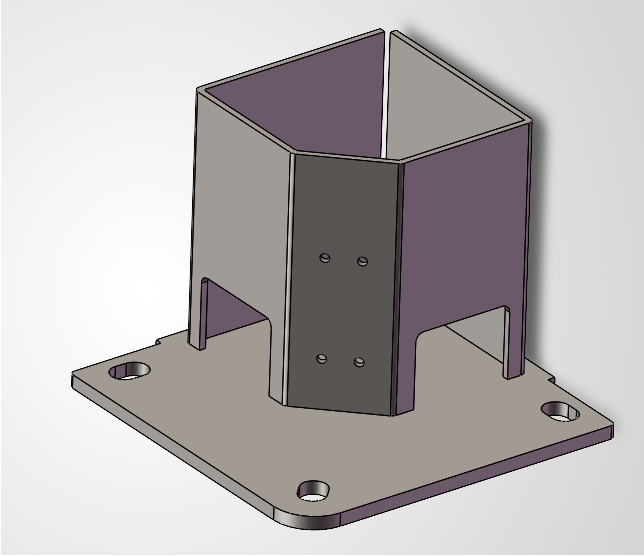
1. Column Foot Plates
- Check if any reddish-brown rust stains are weeping from the weld seams.
- Verify if a proper sealant bead was applied at the joint between the base plate and the concrete foundation to prevent salt water from seeping underneath.
2. Stainless Steel Fasteners (Bolts & Screws)
- Confirm they are at least Grade 304, though Grade 316 stainless steel is highly recommended. If standard iron or carbon steel screws were used, they will snap within two years.
- Look for “flowering” or flaking rust on the bolt heads, which is a warning sign of Stress Corrosion Cracking (SCC).
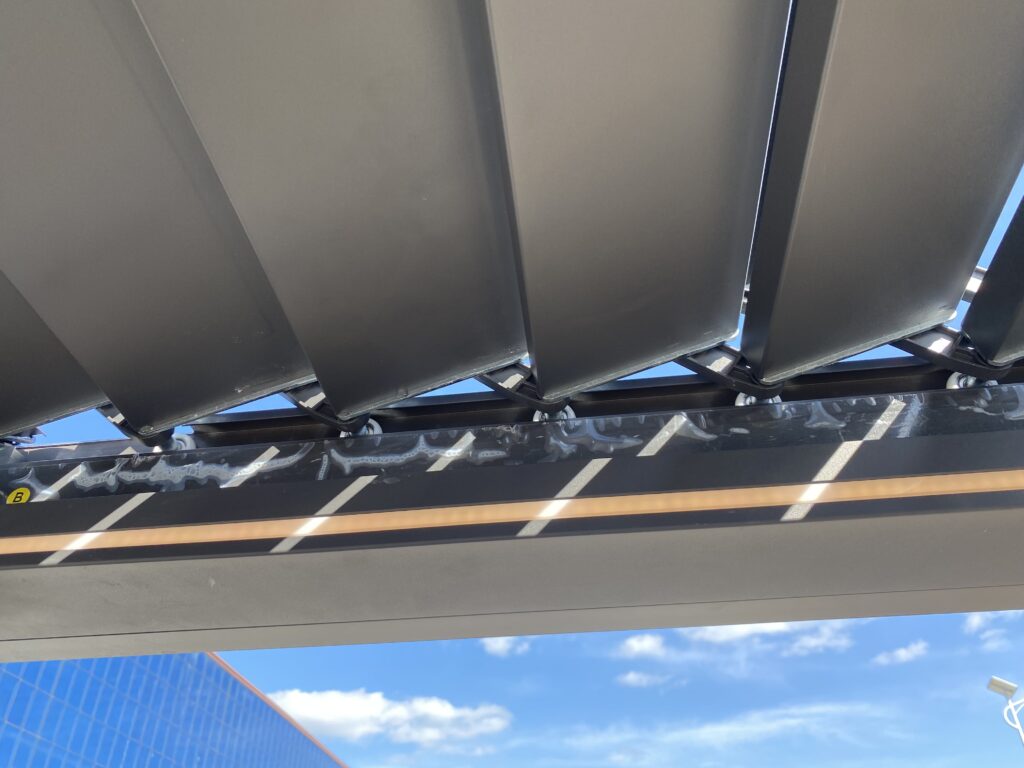
3. Louver Drive Links and Motor Brackets
- These are moving parts where coatings wear down easily. Inspect the base of the linkages for a white, powdery oxidation (the byproduct of aluminum corrosion).
- Ensure the motor housing is made of die-cast aluminum with an anti-corrosion finish. A bare iron-core motor won’t survive a single rainy season by the ocean.
4. Profile End Caps and Joint Seams
- Make sure no end caps have fallen off. If the hollow profiles are left open, sea birds will nest inside, and salt water will pool, rotting the aluminum from the inside out.
5. Gutter Interiors
- Internal drainage troughs are ground zero for pooling water. Check for debris clogs and see if the trapped water has turned green or black, as stagnant electrolyte solutions drastically accelerate corrosion.
6. Grounding Rods and Concrete Foundations
- Inspect the concrete foundation for cracks. If internal rebar becomes exposed, it will rust, expand, and crack the concrete, leading to anchor failure.
Advanced Tech: Two Make-or-Break Engineering Concepts
Galvanic Corrosion: The Invisible Killer
This is the silent assassin of coastal pergolas. When a stainless steel bolt (the cathode) directly touches an aluminum profile (the anode) in the presence of seawater (the electrolyte), it creates a galvanic cell. The aluminum will sacrifice itself and corrode at an accelerated rate to “protect” the stainless steel. This is why you must use nylon or isolation washers to completely separate dissimilar metal surfaces.
Coating Failure Thresholds
Standard powder coating usually lasts only 3 to 5 years by the ocean. Once a coating is scratched, the protective anodic film at the scratch is ruined. This creates an unfavorable “large cathode (intact coating) to small anode (scratch)” ratio, causing the scratch site to deteriorate rapidly. For high-end projects, Fluorocarbon (PVDF) coating is mandatory, as its salt-spray resistance is typically over three times longer than standard powder coating.
FAQ
Q: Everyone says aluminum doesn’t rust. Why do coastal aluminum pergolas still deteriorate?
A: Aluminum doesn’t produce red rust (iron oxide), but it does produce white rust (aluminum oxide). In salt-spray environments, chloride ions penetrate the aluminum’s surface oxide film, causing pitting corrosion. In severe cases, this leads to perforation and a drastic drop in structural strength.
Q: I chose Grade 316 stainless steel screws. Am I completely safe?
A: Not necessarily. If those screws pass through untreated carbon steel washers, or if they directly touch the aluminum profile without an isolation washer, the 316 stainless steel will act as a cathode due to the potential difference, actually accelerating the destruction of the surrounding aluminum.
Q: How often should I inspect a coastal pergola?
A: In high-corrosion zones, a visual inspection should be done quarterly (focusing on the bolts and base plates), alongside a deep inspection once a year (clearing gutters and checking bolt torque). A thorough inspection is absolutely mandatory right before hurricane season.
Q: If I find rusted screws, can I just spray them with anti-rust paint?
A: That only treats the symptom, not the cause. The volume of corrosion byproducts expands, which stretches and weakens the screw hole. The correct fix is to remove the old screw, clean the hole, apply an anti-seize lubricant or marine-grade grease, and install a new Grade 316 stainless steel screw with an isolation washer.
Summary
When building a pergola on the coast, wind load is just the baseline for passing; corrosion resistance is what determines its lifespan. A “structural giant” hollowed out by salt spray can collapse in a routine rainstorm, no matter how low the wind speed is. True wind safety is hidden in the bolts you can’t see, inside the drainage gutters, and within the molecular structure of the materials.
If you are currently selecting a model for a coastal project, or if you are worried about safety hazards on an existing pergola, feel free to send me photos of your site (especially close-ups of the bolts and bases). I would be happy to provide a complimentary online corrosion assessment to see if your structural safety margin is still holding up.