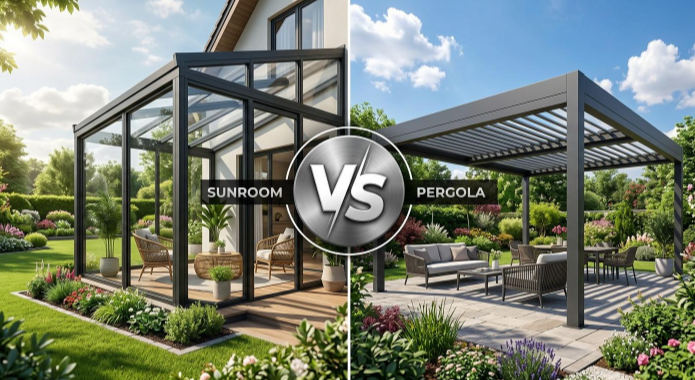


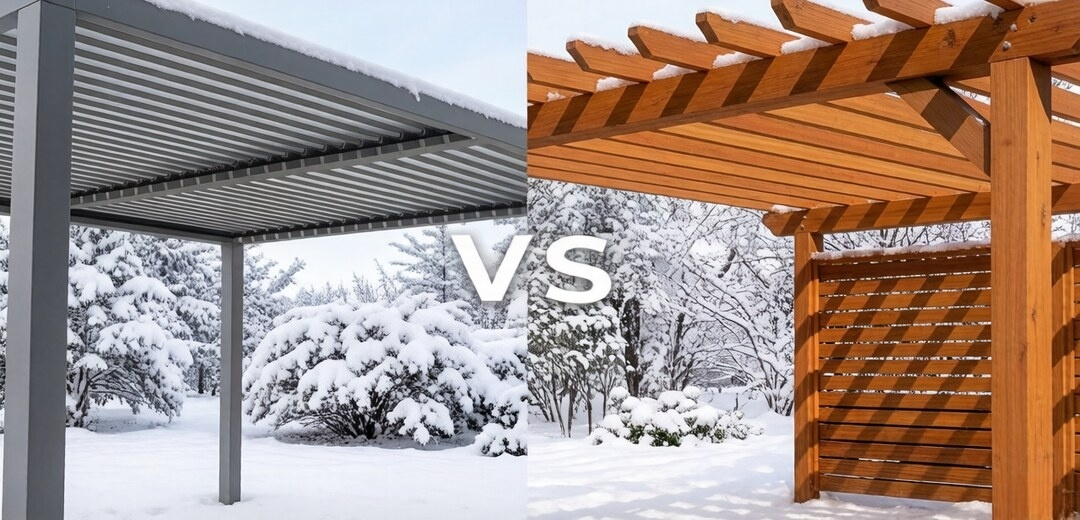
Avez-vous déjà regardé votre jardin ou votre terrasse vide et pensé soudainement : comme ce serait parfait d'avoir un espace où profiter de la nature tout en étant protégé du soleil et de la pluie ? Une fois cette idée ancrée, une question très pratique se pose : devriez-vous opter pour une pergola en bois au charme naturel, ou une pergola en aluminium, élégante et moderne ?
Ce n'est pas seulement un choix de matériau, c'est une décision qui définira votre style de vie, votre engagement en matière d'entretien et votre expérience esthétique pour les années à venir. Dans ce guide, je vais vous présenter les principales différences et des scénarios concrets pour vous aider à trouver l'option qui correspond vraiment à votre vision.
1. Principe fondamental : le matériau définit le “ caractère ” et l“” avenir » de votre pergola
Au cœur de votre décision se trouve la compréhension de la manière dont chaque matériau correspond à la fonction de la pergola, à vos préférences émotionnelles et au niveau de maintenance que vous êtes prêt à investir. Il s'agit d'équilibrer trois dimensions clés :
Émotion contre Valeur
Le bois offre de la chaleur, un sentiment de vie et une appréciation naturelle au fil du temps. L'aluminium, quant à lui, procure précision, une esthétique épurée et un sentiment de fiabilité.
Temps vs. Maintenance
Le bois demande du soin et de l'attention — c'est quelque chose que l'on “ entretient ” au fil du temps, développant une patine unique. L'aluminium promet une expérience de type “ installer une fois, profiter pendant des années ” avec un entretien minimal.
Environnement vs. Performance
Dans les régions humides et sujettes aux insectes, l'aluminium est naturellement plus performant. Dans les climats doux où l'esthétique classique est recherchée, le bois offre un attrait visuel inégalé.
2. Orientation basée sur des scénarios : Différents styles de vie, différents choix
Scénario 1 : Un espace de réunion familial chaleureux
Si vous imaginez un espace de barbecue extérieur animé ou un endroit sûr et confortable où les enfants peuvent jouer, une pergola en bois est le choix idéal. Sa texture naturelle adoucit l'espace et crée une atmosphère relaxante et accueillante qui encourage la connexion. Optez pour du cèdre ou du bois traité sous pression, et assurez une couverture de toit adéquate.
Scénario 2 : Espace commercial ou de loisirs nécessitant peu d'entretien
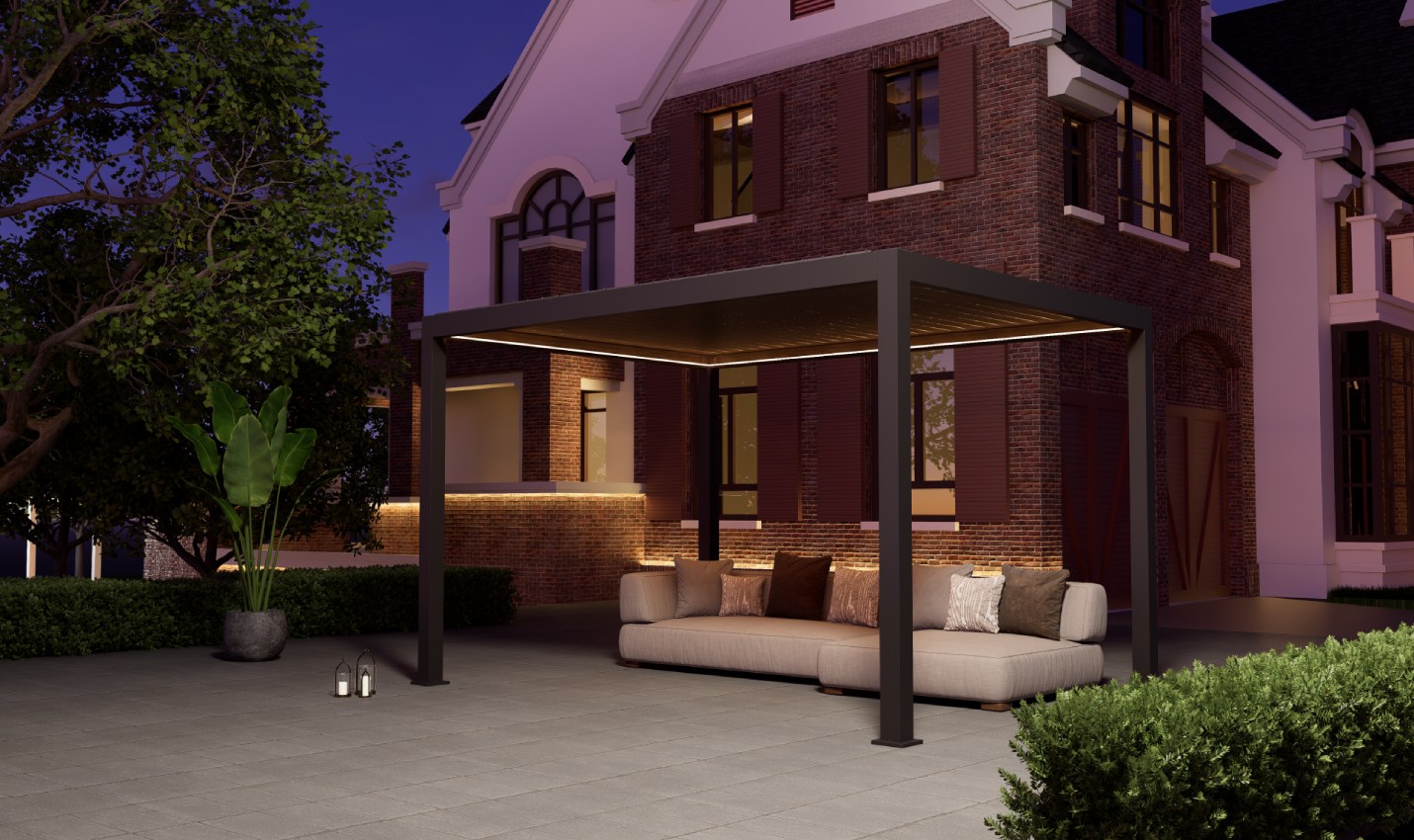
Pour les terrasses de café, les propriétaires de villas à la recherche de commodité ou les modes de vie urbains trépidants, les pergolas en aluminium sont le choix idéal. Leur excellente résistance aux intempéries et leur entretien quasi nul vous permettent de vous concentrer sur le plaisir plutôt que sur l'entretien. Les toits à lamelles motorisés améliorent encore l'adaptabilité et la fiabilité par temps changeant.
Scénario 3 : Un Point Focal de Jardin et une Œuvre d'Art Vivante
Si vous considérez votre pergola comme un élément du design paysager, quelque chose qui s'intègre parfaitement aux plantes et évolue avec le temps, le bois est le choix supérieur. Il s'associe magnifiquement aux plantes grimpantes comme la glycine ou les roses, devenant une œuvre d'art “vivante” qui grandit avec votre jardin.
3. Conseils pratiques : Éviter les écueils de la sélection à l'installation
Lors du choix du bois :
Demandez toujours le niveau de traitement conservateur (par exemple, la classification ACQ). Inspectez les gros nœuds ou les fissures. Le bois traité de haute qualité doit porter des marquages clairs et des informations du fabricant.
Lors du choix de l'aluminium :
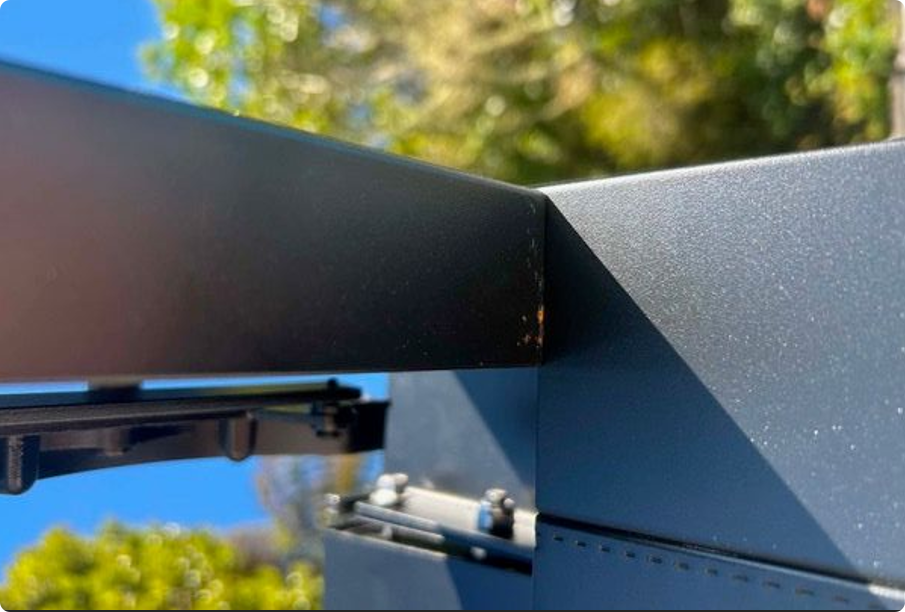
Ne vous concentrez pas uniquement sur le prix. Vérifiez l'épaisseur du profil (les normes courantes sont généralement de 1,2 mm ou plus) et le traitement de surface. Le revêtement en poudre est plus durable que la peinture standard. Testez les systèmes manuels pour vous assurer d'un fonctionnement fluide et silencieux.
Liste de contrôle d'installation :
- Structures en bois : Assurez-vous que toutes les connexions utilisent des fixations en acier galvanisé à chaud ou en acier inoxydable pour prévenir la rouille et prolonger la durée de vie.
- Structures en Aluminium : Testez l'étanchéité du toit en simulant une pluie (ou en utilisant un tuyau d'arrosage) pour vérifier les fuites. Vérifiez que la structure est de niveau et correctement alignée.
Conseil d'allocation budgétaire :
Quel que soit votre choix, ne lésinez pas sur la structure principale ou le matériel : ils sont essentiels pour la sécurité et la durabilité. Vous pouvez étaler votre investissement en terminant d'abord la structure et en ajoutant plus tard des éléments comme l'éclairage, les ventilateurs ou les écrans.
4. Aperçus avancés : plongée dans les détails de l'artisanat
Traitements bois “ Amélioration ”
Le bois thermotraité haut de gamme (comme l'épicéa thermotraité) subit un traitement thermique sans produits chimiques, améliorant considérablement sa stabilité et sa résistance à la pourriture tout en lui donnant une couleur plus riche et plus uniforme.
Technologie intégrée dans les systèmes d'aluminium
Les pergolas en aluminium haut de gamme comprennent souvent des systèmes de drainage dissimulés pour un aspect plus épuré, des moteurs silencieux avec des capteurs de pluie et de vent pour un fonctionnement intelligent, et des profilés internes renforcés pour une plus grande résistance structurelle sur de grandes portées.
5. Foire Aux Questions (FAQ)
Q1 : Lequel est le plus durable ?
Dans des normes de qualité similaires et avec un entretien approprié, l'aluminium dure généralement plus longtemps (30 à 50 ans) et résiste à la pourriture et aux insectes. Les pergolas en bois de haute qualité (comme le cèdre rouge de l'Ouest correctement traité) peuvent également durer de 20 à 30 ans, mais nécessitent un entretien régulier.
Q2 : Lequel est le plus cher ?
Les coûts initiaux se classent généralement comme suit : bois dur de qualité supérieure (par exemple, bois dur indonésien) > systèmes en aluminium de haute qualité > bois traité standard. Cependant, lorsqu'on considère les coûts du cycle de vie, les dépenses d'entretien du bois (ponçage, huilage) doivent être prises en compte, tandis que l'aluminium reste peu coûteux sur la durée.
Q3 : L'entretien du bois est-il vraiment si exigeant ?
Cela dépend de vos attentes. Si vous êtes à l'aise avec le fait qu'il prenne une teinte grise naturelle avec le temps, l'entretien est minimal. Pour préserver sa couleur et son état d'origine, il est recommandé de le nettoyer et de le huiler tous les 1 à 2 ans, ce qui relève plus du rituel que d'une corvée pour certains.
Q4 : Quelle option est la plus écologique ?
C'est une question nuancée. Le bois est renouvelable avec une faible empreinte carbone, surtout s'il provient de forêts gérées durablement (par exemple, certifiées FSC). L'aluminium nécessite une énergie importante pour sa production mais est entièrement recyclable, et sa longue durée de vie compense son impact environnemental au fil du temps.
Q5 : Puis-je combiner les deux matériaux ?
Absolument, et c'est une approche populaire. Par exemple, les cadres et les systèmes de toiture en aluminium peuvent offrir une stabilité structurelle et un faible entretien, tandis que les éléments en bois tels que les lamelles, les panneaux ou les terrasses ajoutent de la chaleur et un attrait naturel.
6. Pensées finales
Il n'y a pas de vainqueur absolu entre le bois et l'aluminium, seulement le choix qui convient le mieux à votre style de vie. Au final, il s'agit de savoir si vous voulez grandir aux côtés d'un “ matériau vivant ” ou vous fier à un “ partenaire moderne et durable ”.”
J'espère que ce guide apportera de la clarté à votre décision. Si vous avez déjà une préférence, ou si vous pesez encore des détails spécifiques, n'hésitez pas à partager vos réflexions et les exigences de votre projet. Parlons et donnons vie à votre espace extérieur idéal.