

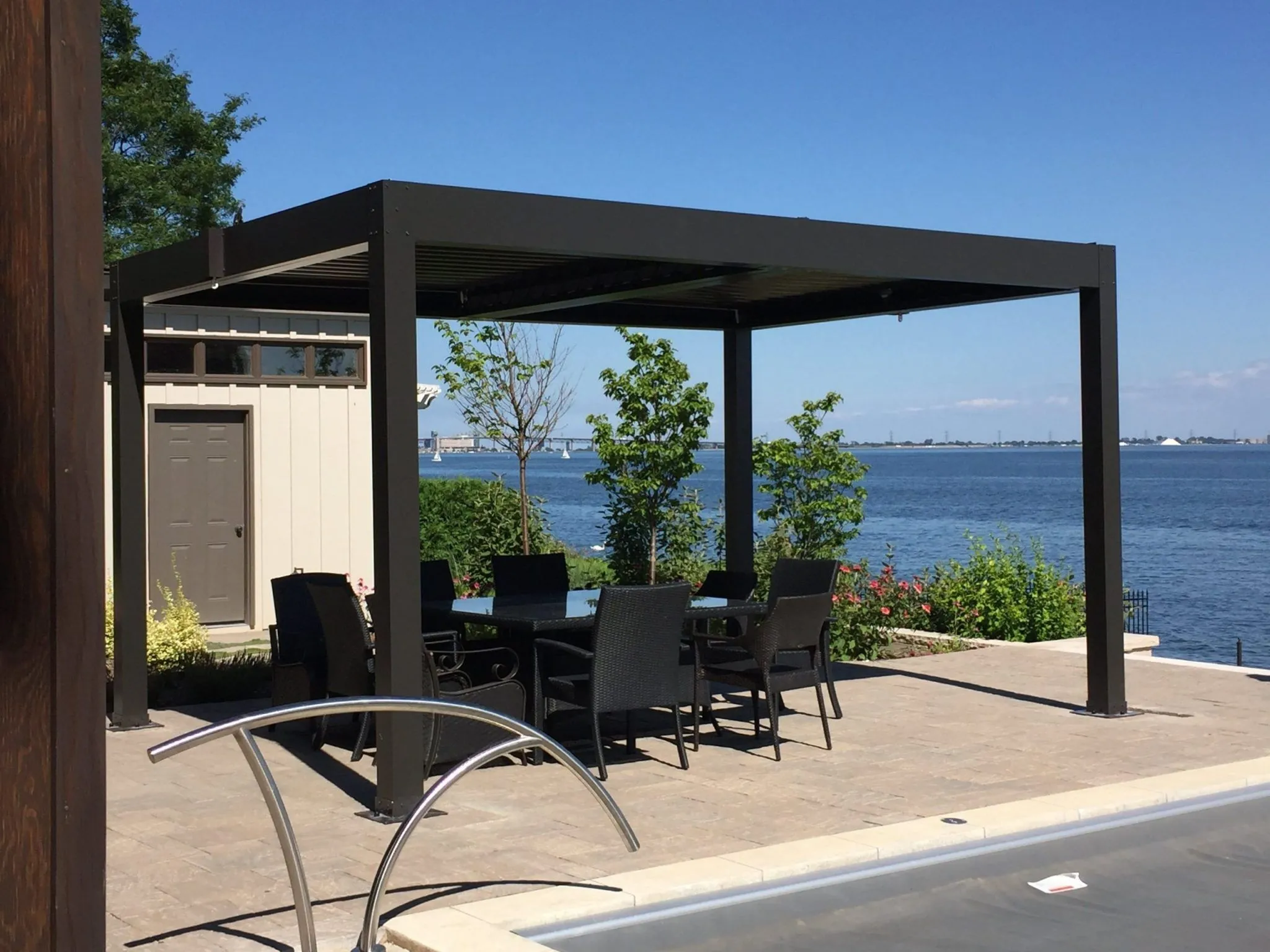
Have you ever stopped to wonder how many of those stunning backyard photos we admire online turn into a pile of rusted scrap metal just a few years later due to the wrong material choice?
Is there a moment when you suddenly realize that while you are obsessing over styles and colors, the most critical deciding factor is actually this: Are you buying a beautiful garden ornament, or are you signing a ten-year mandatory maintenance contract?
The debate between a steel pergola and an aluminum pergola has never been just about aesthetics. It is a strategic tradeoff involving longevity, climate resilience, and your willingness to pick up a paintbrush. If you find yourself stuck at this crossroads, this comprehensive guide is tailored specifically for you.
In this article, we will strip away the marketing filters and provide a clear, objective comparison guide based on actual physical properties and engineering logic. We will deep-dive into the hidden costs that most buyers overlook, helping you precisely match the perfect pergola to your home.
Core Principles: Brute Force Strength vs. Environmental Resilience
The fundamental tradeoff comes down to a simple formula: Steel delivers “brute force” and structural rigidity, while aluminum offers superior corrosion resistance and ultra-low maintenance.
- Material Nature: Steel is dense and heavy, remaining absolutely rock-solid underfoot. Aluminum is lightweight and flexible, engineered from the ground up to withstand atmospheric elements without decomposing.
- The Rust Factor: This is the ultimate tie-breaker. Once the protective coating on steel is compromised, rust is inevitable. Conversely, aluminum naturally generates a dense oxide layer that permanently blocks deep-core corrosion.
- Thermal Behavior: Steel absorbs heat quickly and dissipates it slowly, which can raise the perceived temperature directly underneath it. Aluminum reflects a higher percentage of thermal radiation, though it will still feel hot to the touch under direct, prolonged sunlight.
- Structural Load: Steel boasts an exceptionally high yield strength, making it the undisputed king in areas with heavy snow loads. Aluminum requires significantly thicker profiles to achieve equivalent load-bearing capacities.
Scenario-Based Buying Guide
To find your ideal match, simply align your specific living situation with the scenarios listed below:
| Scenario / Environment | Recommended Material | Engineering Justification |
| Coastal & High-Humidity Areas | Aluminum | Salt spray is fatal to steel. Aluminum will not perforate or rust out even when situated just meters from breaking waves. |
| Heavy Snow & Severe Cold Regions | Steel | Heavy, wet snow accumulation demands extreme tensile strength. Steel’s structural stability is unmatched in these conditions. |
| DIY / Self-Installation | Aluminum | Lightweight and highly manageable. Two adults can easily lift and assemble the components without needing cranes or heavy machinery. |
| Wall-Mounted / Attached Structures | Steel | Requires immense anchoring force. The rigid nature of steel provides a more stable, secure support system against the existing wall. |
| The “Hands-Off” Homeowner | Aluminum | Electrostatically powder-coated aluminum simply needs a quick rinse with a garden hose to look brand new for decades. |
Practical Pitfall Prevention: 3 Critical Hard Indicators
Before placing your order, ensure you rigorously verify these three critical specifications:
Indicator 1: Material Specification (Gauge vs. Alloy Class)
- Steel Pergola: Insist on a 14-gauge standard or thicker. Thin-walled steel is not only prone to structural wobbling, but it can also suffer from resonance failure and snap during high winds.
- Aluminum Pergola: Look exclusively for 6061-T6 aircraft-grade alloy. Strictly avoid recycled aluminum (such as the 3000 series), which is brittle, lacks toughness, and degrades quickly under stress.
Indicator 2: Surface Treatment (Hot-Dip Galvanization vs. Powder Coating)
- Steel Pergola: It must feature a Hot-Dip Galvanized base coat prior to painting. If it is finished with standard liquid paint, do not buy it—that is a red carpet invitation for premature rust.
- Aluminum Pergola: Electrostatic Powder Coating is mandatory. Standard liquid paint (Baked Finish / Liquid Paint) peels easily under UV radiation and offers poor weathering resistance.
Indicator 3: Base Anchor Plates
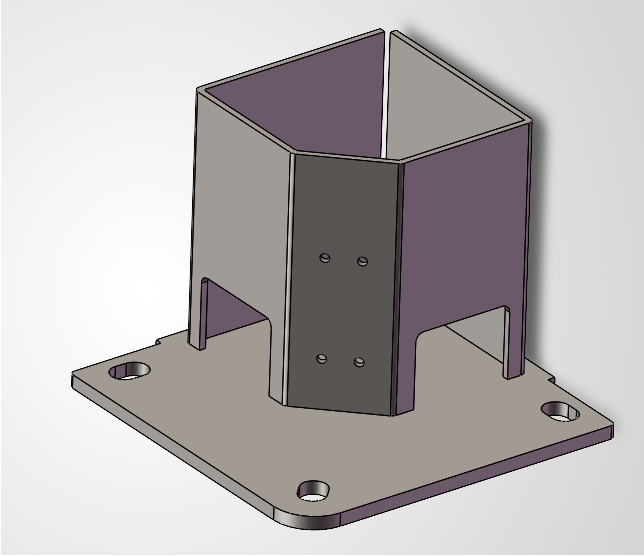
Examine the bottom flange or anchor plate of the samples. For a steel pergola, the thickness must be at least 8mm to pass quality standards. If it feels as thin as sheet metal, the entire pergola will act like a pendulum during severe windstorms.
Advanced Engineering Concepts: Galvanic Corrosion & Elastic Modulus
If you want to step up your buying game, mastering these two advanced concepts will allow you to evaluate options like a seasoned structural engineer:
Galvanic Corrosion
In coastal zones, if steel screws are used to secure aluminum profiles, the aluminum will act as a “sacrificial anode” and corrode at an accelerated rate in the presence of salt water. Therefore, premium coastal aluminum pergolas must utilize A4-316 stainless steel fasteners to prevent chemical degradation.
Modulus of Elasticity
The elastic modulus of iron/steel is approximately three times that of aluminum. This means that given the exact same profile shape and load, aluminum will deflect (bend) three times more than steel. To compensate for this physical trait, a properly engineered aluminum pergola must utilize much thicker, more substantial profiles (e.g., 150mm x 150mm posts to replace 100mm x 100mm steel posts). If you see an aluminum pergola designed with profiles as slender as a steel alternative, it faces a high probability of structural failure under strong wind loads.
Frequently Asked Questions (FAQ)
Q: Is aluminum structurally strong enough to support wide architectural spans?
A: Yes, provided it is engineered correctly. Because aluminum has a lower structural rigidity, manufacturers must compensate by increasing the profile wall thickness and optimizing internal geometries, such as adding internal reinforcement ribs. Slender, unreinforced aluminum profiles are inherently unsafe for wide spans.
Q: Can I manually repaint and maintain a steel pergola myself?
A: You can, but it is often a losing battle. Professional surface treatment is incredibly precise; any microscopic rust spot missed during preparation will continue to spread beneath the new coat of paint. Generally, it requires a labor-intensive process of thorough sanding and repainting every 2 to 3 years.
Q: Do aluminum pergolas become scalding hot to the touch during peak summer?
A: They absorb heat, but they rarely reach temperatures that cause burns unless they feature a dark finish and are exposed to intense, all-day direct sunlight. Modern, high-tier powder coatings incorporate UV inhibitors that actively lower surface temperatures, making them significantly safer than raw, untreated metal.
Q: Which material option is more environmentally friendly?
A: Aluminum wins this round. Premium aluminum pergolas typically contain a high percentage of post-consumer recycled content. Furthermore, at the end of its exceptionally long lifecycle, aluminum can be recycled infinitely without losing its material properties, resulting in a substantially lower lifetime carbon footprint.
Conclusion & Expert Recommendation
Ultimately, choosing between steel and aluminum is not about identifying which material is universally superior; it is about determining which material perfectly aligns with your local environment and lifestyle. If you live near the coast and want a maintenance-free backyard lifestyle, aluminum is the only logical choice. If you face heavy annual snowfall and prefer a classic, heavy-set industrial aesthetic, steel will serve as your ultimate structural guardian.
Do not let dazzling showroom samples cloud your judgment. Invest with the next ten years in mind.
Still unsure about the best choice for your specific property?
Feel free to share your geographic location (city and approximate distance to the coast) along with a few photos of your planned installation area. I would be happy to provide a personalized evaluation detailing the ideal material type and profile thickness to ensure your backyard investment stands rock-solid for years to come.