


[latexpage]
Al comprar una pérgola de lamas motorizadas de aluminio, es probable que te hayas encontrado con afirmaciones llamativas de los fabricantes como: “Rejillas entrelazadas a prueba de fugas”, “Soporta una carga de nieve de 40 libras por pie cuadrado”,” o “Diseñado para soportar huracanes de clase 10”.”
Sin embargo, Cada vez que se emite un aviso de tormenta grave, tifón o ventisca, los instaladores profesionales y los equipos de mantenimiento lanzan un recordatorio urgente que va en contra de lo que dicta el sentido común: ¡abre las lamas inmediatamente hasta dejarlas en posición abierta o semiabierta!
Abrir el tejado para protegerlo de las inclemencias del tiempo parece totalmente ilógico. Si está construido para “resistir” los elementos, ¿por qué dejar que entren? Al profundizar en las normas internacionales de la AMCA, los códigos de carga estructural y la mecánica de los materiales, podemos desentrañar los tres principios físicos y mecánicos ocultos que subyacen a este consejo de los expertos.
🌬️ Principio 1. Carga del viento: cierre con lamas frente a alivio de la presión aerodinámica
La mayoría de la gente malinterpreta los índices de resistencia al viento. El índice que indica un fabricante suele referirse a un entorno estático cuando las rejillas están completamente cerradas y la estructura se encuentra en perfecto estado. Las tormentas reales, sin embargo, no traen corrientes de aire constantes, sino que traen vientos pulsantes y aleteo aerodinámico (resonancia).
1. De la “fuerza bruta” a la “deviación autoadaptativa”
La Asociación para el Control y el Movimiento del Aire (AMCA), en su publicación El rendimiento y la selección de las persianas, establece explícitamente que las cargas de viento de diseño deben cumplir con los códigos estructurales, considerando que la unión entre las lamas de las persianas y el marco es de tipo articulado. Esto significa que las persianas están diseñadas fundamentalmente para dejar que pase el viento, y no actuar como una presa infranqueable.
De hecho, muchas patentes de persianas autoadaptables y resistentes al viento indican lo siguiente: “Cuando las palas se ven sometidas a la presión del viento, se genera un par de torsión que hace que las palas se inclinen hasta alcanzar un ángulo paralelo a la dirección del viento. Cuanto mayor es la presión del viento, más se acercan a la posición paralela”.”
2. La crisis de las vías de transmisión de cargas estructurales
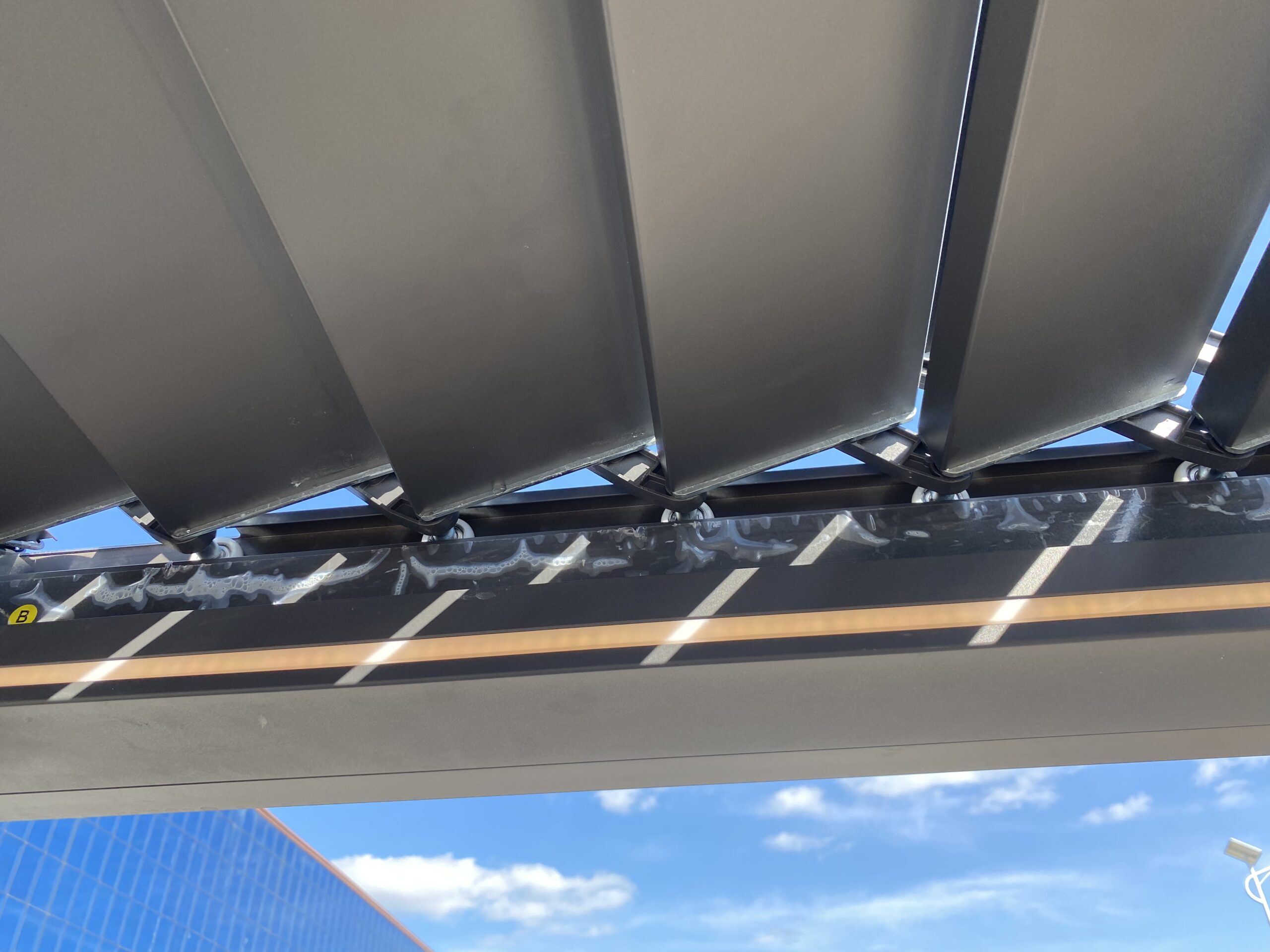
Cuando las persianas están completamente cerradas, el tejado se convierte en una enorme vela. El viento fuerte genera una presión colosal que se abre paso a través de una vía de carga concentrada: Palas → Barras de articulación → Actuador/motor → Columnas de soporte. En condiciones de viento extremo, lo que suele fallar no es el colapso de la estructura central, sino el pandeo de determinados componentes mecánicos:
- Desacoplamiento del mecanismo: Las juntas de enclavamiento se levantan, se deforman o se desenganchan debido a la mera fuerza de elevación.
- Sobrecarga del motor: Los fuertes vientos desalinean violentamente las palas, lo que provoca una sobrecarga y el quemado de los actuadores lineales o los motores.
- Momentos flectores de sobreextensión: Los momentos flectores en las vigas en voladizo superan los límites críticos, lo que provoca fatiga en la estructura metálica.
💡 Conclusión clave sobre SEO: Al girar las lamas a un ángulo de entre 45° y 90°, el viento de alta velocidad puede atravesar directamente los huecos. Esto reduce drásticamente la superficie efectiva que se ve afectada por el viento y alivia la mayor parte de la presión aerodinámica, lo que mantiene tu pérgola firmemente anclada al suelo.
❄️ Principio 2. Cargas de nieve y hielo + conductividad térmica: la trampa estructural del ciclo de congelación-descongelación
Las pérgolas metálicas son mucho más sensibles a las temperaturas bajo cero y a las precipitaciones heladas que las estructuras tradicionales de madera o PVC, sobre todo debido a un peligroso círculo vicioso conocido como «ciclo de congelación-descongelación».
1. Los códigos estructurales dan prioridad a la descarga de esfuerzos frente a la resistencia estructural
Según las directrices de diseño estructural para refugios al aire libre en regiones frías, la ingeniería arquitectónica habitual recurre a pendientes pronunciadas (ángulos $\ge 60^\circ$) o a canales específicos para la eliminación de la nieve con el fin de evitar su acumulación.
Sin embargo, el techo de una pérgola con lamas queda prácticamente plano cuando está cerrado. La nieve pesada y húmeda que se da en la vida real —junto con el proceso continuo de derretimiento y recongelación— alcanza densidades mucho mayores que las cargas estáticas uniformes con las que se realizan las pruebas en entornos de laboratorio en condiciones ideales. Esa capacidad de carga de nieve certificada puede superarse rápidamente durante una ventisca prolongada.
2. Cómo la alta conductividad térmica desencadena el ciclo de “congelación-descongelación-expansión”
El aluminio presenta una conductividad térmica excepcionalmente alta, de aproximadamente $200\text{ W/(m·K)}$, lo que supone tres órdenes de magnitud más que la madera. En condiciones invernales, esta rápida transferencia de temperatura supone un grave riesgo operativo:
La luz del sol y el calor interior derriten la capa superior de nieve → El agua se filtra por las ranuras entrelazadas y cerradas → Las bajadas de temperatura nocturnas provocan una congelación profunda y la expansión
Esta congelación cíclica da lugar a dos problemas principales:
- Mecanismos “soldados” y bloqueados: El hielo fija firmemente las lamas de la persiana en la posición cerrada. Si posteriormente se fuerza la apertura del sistema motorizado, el motor se quema fácilmente debido a un par insuficiente.
- Apertura estructural: El hielo que se expande genera una presión enorme que deforma los burletes de goma y afecta a los bordes de encaje.
3. Fallos por obstrucción del sistema de desagüe
Cuando está cerrado, el agua procedente del deshielo de la nieve debe discurrir exclusivamente por los bajantes internos situados dentro de los postes de soporte. Si estos conductos de drenaje se congelan y se obstruyen, el agua se acumula en el tejado y se solidifica formando una capa de hielo. El tejado se ve entonces obligado a soportar un una mezcla de tres elementos: nieve, hielo y agua retenida, lo que multiplica considerablemente el riesgo de un colapso estructural repentino.
💡 Medidas preventivas: Al abrir las rejillas durante una ventisca, la nieve cae directamente a través de los huecos o es arrastrada por el viento, lo que evita que se forme una capa densa y continua sobre la estructura del tejado.
🌡️ Principio 3. Expansión térmica: por qué las persianas de gran envergadura necesitan espacio para «respirar»
Las tormentas intensas y las ventiscas suelen ir acompañadas casi siempre de cambios extremos y rápidos de temperatura (como el descenso repentino que se produce durante el paso de un frente frío). Una estructura metálica puede sufrir una oscilación de temperatura de decenas de grados en un solo día.
El aluminio tiene un elevado coeficiente de expansión térmica (aproximadamente $23 \times 10^{-6}/\text{°C}$). Las normas de la AMCA incluyen una advertencia explícita sobre esta propiedad: “Las secciones grandes de las rejillas no deben unirse entre sí de forma demasiado ajustada… debe dejarse margen suficiente para los ajustes necesarios a fin de evitar distorsiones estructurales, y deben tenerse en cuenta los efectos de la dilatación térmica”.”
Si las lamas de gran envergadura permanecen firmemente entrelazadas durante un descenso o un aumento brusco de la temperatura, la enorme tensión térmica interna no tiene por dónde escapar, lo que da lugar a:
- Combarse en el centro del vano: La parte central de las palas se curva hacia arriba o hacia abajo, lo que provoca que las juntas de sellado no encajen correctamente y se produzcan fugas durante las próximas lluvias.
- Gripado del rodamiento: Los pasadores de pivote laterales y los rodamientos se comprimen, lo que bloquea el mecanismo e impide su funcionamiento fluido.
El principio de la respiración: Mantener las lamas semiabiertas o totalmente abiertas proporciona un espacio físico esencial entre ellas, lo que da al metal el “espacio para respirar” exacto que necesita para expandirse y contraerse libremente.
🎯 Guía de referencia rápida: Ajustes para las condiciones meteorológicas de la pérgola metálica
Para un mantenimiento óptimo de la propiedad, utiliza esta matriz de configuración meteorológica con base científica:
| Condiciones meteorológicas | Ángulo recomendado | Razón estructural fundamental |
| Lluvia ligera y brisa suave | Totalmente cerrado (0°) | Protección normal contra la lluvia; las cargas de viento y nieve son insignificantes. |
| El sol abrasador del verano | Ajustado a 45° | Bloquea la luz solar directa y, al mismo tiempo, aprovecha el efecto chimenea para permitir que se escape el aire caliente. |
| Alerta por fuertes vientos / Alerta de tormenta | Se abre entre 60° y 90° | Reduce al mínimo la resistencia al viento para proteger los actuadores y el chasis. |
| Avisos de ventisca y lluvia helada | Totalmente abierta (90°) o gran angular | Evita que se acumule la nieve y que los mecanismos de bloqueo por hielo se congelen y se atasquen. |
| Fases posteriores a la tormenta / de deshielo | Mantener abierto inicialmente | Deja que las palas, los cojinetes y los bajantes se sequen o se descongelen por completo antes de cerrarlos. |
⚠️ Advertencia importante para los propietarios de pérgolas inteligentes (evita esta trampa)
Muchas pérgolas metálicas de alta gama que se encuentran en el mercado cuentan con sensores de lluvia automáticos promocionado como un lujo del tipo “configurarlo y olvidarse, con cierre automático”.
Esto supone un grave riesgo para la seguridad en condiciones meteorológicas extremas: Estos sensores no pueden distinguir entre un ligero chaparrón de verano y una tormenta tropical. Cuando se produzca una tormenta intensa, el sistema automático cerrará las persianas por completo—sin darte cuenta, estás colocando tu pérgola en su posición más vulnerable, la que soporta una mayor carga de viento.
Recomendación de los expertos: Cuando se emita un aviso de tormenta grave, viento fuerte o ventisca, Siempre anula o desconecta la alimentación de los sensores automáticos y bloquea manualmente las lamas en su posición de apertura predeterminada a través de la aplicación o del controlador físico.
📚 Fuentes y referencias arquitectónicas
- AMCA International: El rendimiento y la selección de las persianas, apartados B.2 y B.3 (Cargas de viento y nieve y cláusulas sobre expansión térmica).
- Códigos nacionales de construcción: Normas de cálculo de cargas de viento y nieve para estructuras abiertas y semicerradas.
- Estudios de ingeniería en regiones frías: Protocolos estructurales para la prevención de la carga de hielo y la mitigación de la dilatación por congelación-descongelación.
- Perfiles de patentes industriales: Mecanismos de ventilación autoadaptables contra el viento para contraventanas arquitectónicas exteriores.