


Have you ever stopped to wonder why you spent thousands of dollars upgrading accessories on your aluminum pergola, only to end up sitting under it occasionally on sunny days? Or why those “must-have” LED strip lights, Bluetooth speakers, and patio heaters sit unused most of the time?
When I first started researching aluminum pergolas, I was captivated by showroom photos featuring RGB lighting, integrated sound systems, and laser-cut decorative panels. It felt like if I didn’t add all of them, I wasn’t getting my money’s worth.
However, after installing three pergolas—one in my own backyard and two for friends—I realized a simple truth: Most accessories are merely nice-to-have. Only a select few determine whether your pergola is functional, durable, and comfortable. The rest can wait until you actually live with the structure, sit underneath it, and experience a few rainstorms.
Below is a breakdown of the common pitfalls, real-world usage frequencies, and technical details dealers rarely share, helping you make informed decisions without getting overwhelmed by options.
The #1 Mistake Most Buyers Make: Reversing the Sequence
Buying accessories in the wrong order is the most expensive and frustrating mistake you can make.
Many homeowners buy lights, heaters, and speakers first, only to discover that their roof isn’t motorized, the drainage system is missing, or side screen tracks cannot be installed.
Real-World Example: One homeowner spent thousands on LED strips and infrared heaters, only to realize after installation that the fixed louvers made the patio unusable during heavy rain. Wanting to upgrade to motorized adjustable louvers later, they found out that structural load-bearing and wiring paths hadn’t been pre-routed. Retrofitting cost twice as much as ordering it correctly from the start.
The Correct 4-Step Selection Process
- Step 1: Choose the Roof System (Fixed / Manual / Motorized Louvers)
This establishes the core functional limit of the entire system. - Step 2: Define Integrated Drainage
Must be factory pre-engineered; retrofitting is virtually impossible. - Step 3: Plan Electrical Components (LEDs, Heaters, Fans, Sensors)
Internal wiring channels within the aluminum extrusions must be reserved beforehand. - Step 4: Select Enclosures & Side Protection (ZIP Screens, Glass Doors, Curtains)
Final dimensions rely on exact post-installation opening measurements.
Core Rule: Decide on all accessories before production. Post-installation add-ons frequently lead to exposed wiring, mismatched track alignment, and motor incompatibility.
Accessories Priority Matrix Based on Climate & Use Case
Different climates and primary uses dictate completely different accessory priorities:
- Rain & Sun Protection Only: Prioritize a high-quality louvered roof and internal drainage system.
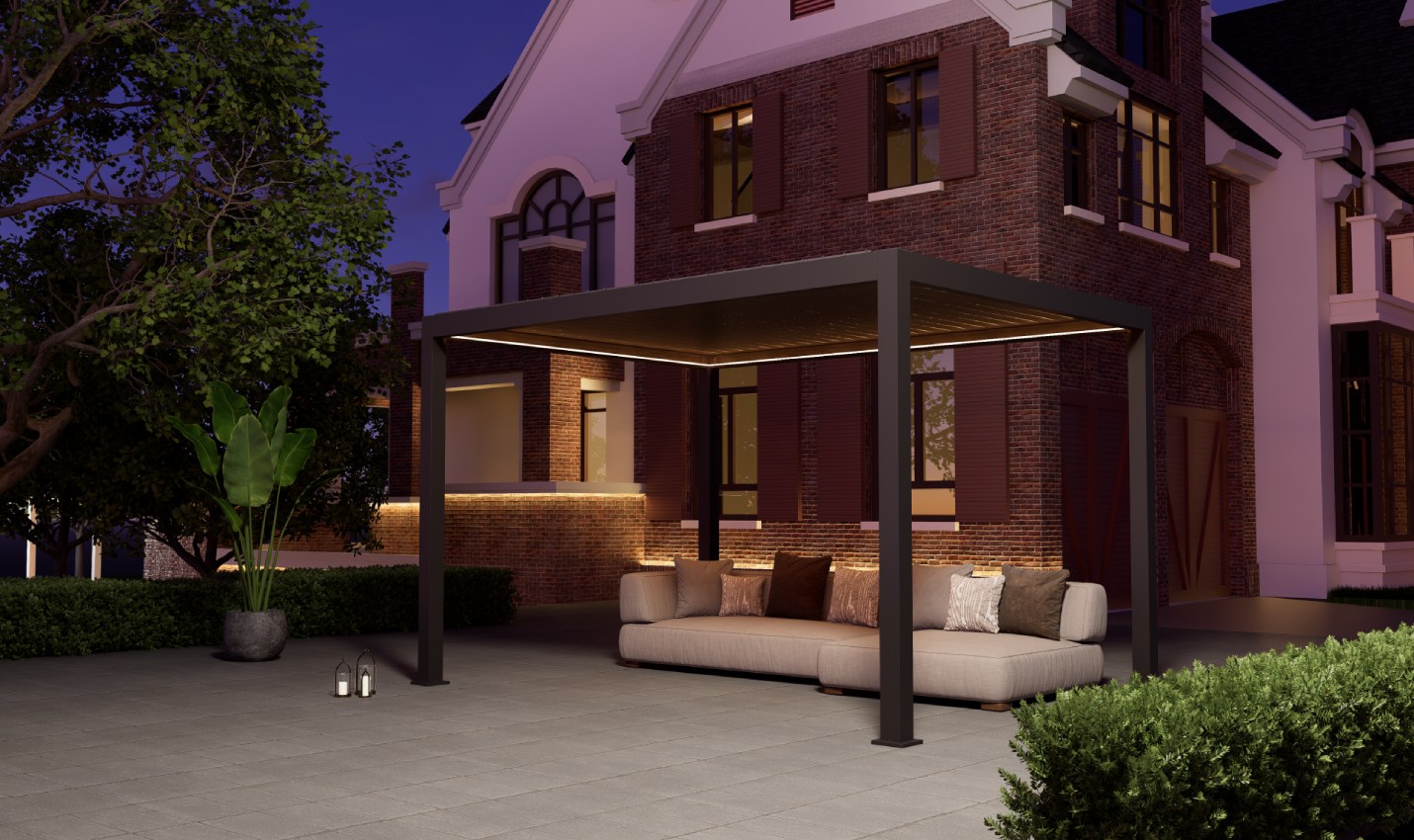
- Evening Use: Integrated low-voltage LED strip lights become Priority #1 once the roof system is set.
- Three-Season Comfort: Add infrared patio heaters in cold regions, or corrosion-resistant ceiling fans in warm/humid climates.
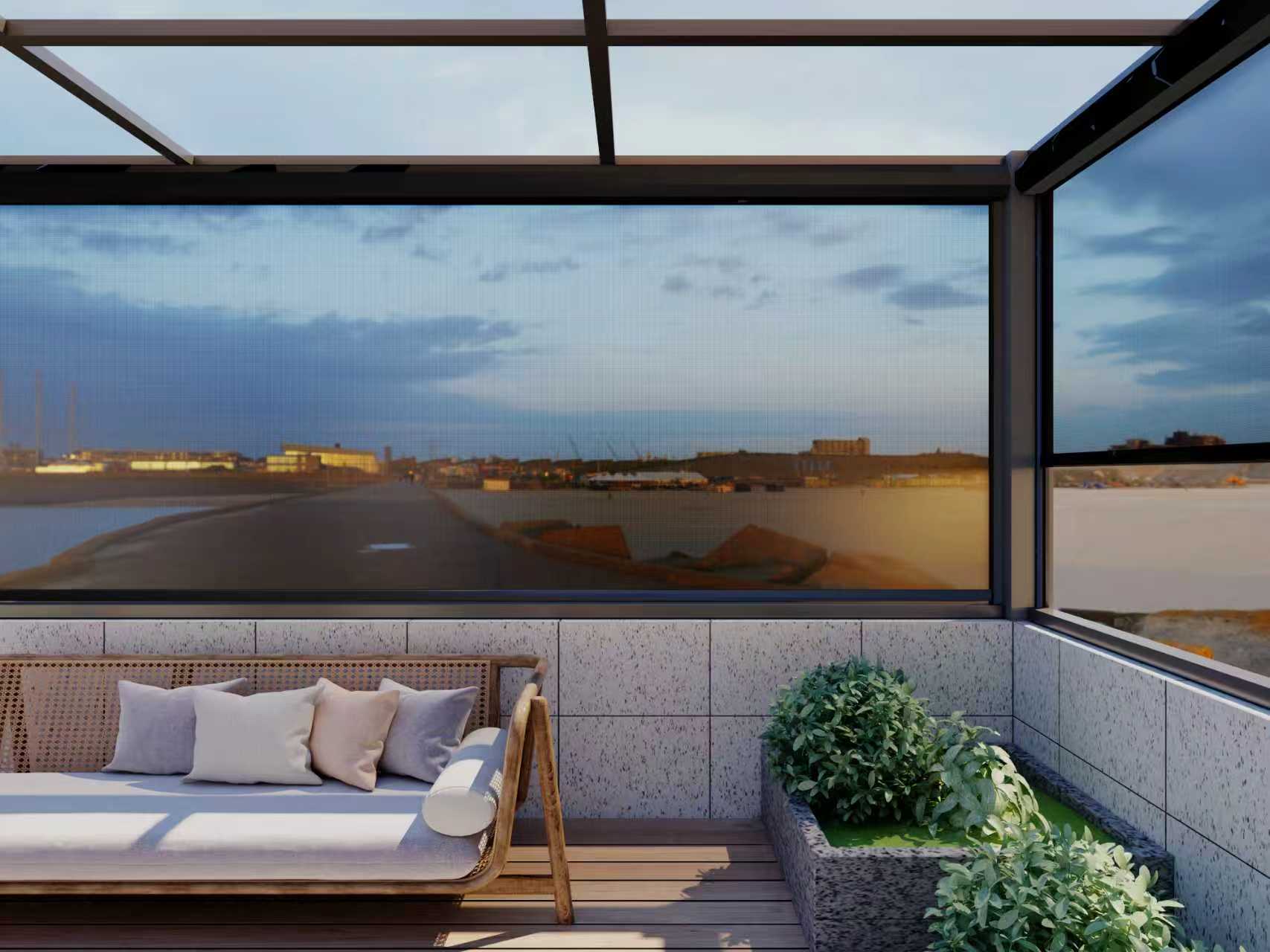
- Privacy & Wind Protection: Install motorized ZIP side screens if your yard faces street traffic or close neighbors.
- Integración en el hogar inteligente: Add automated rain/wind sensors and mobile app controls for hands-free operation.
- Commercial Patio Applications: Go for the complete package: Motorized Roof + ZIP Screens + Heaters + Sliding Glass Doors.
Detailed Buying Guide for Essential Accessories
1. Motorized Adjustable Louvered Roof
Fixed-roof pergolas tend to overheat on sunny days and trap you inside during rain. A motorized louvered roof adjusts from 0° to 90° (or up to 135°). When fully closed, rainwater routes into patented perimeter gutters and drains down internal hollow posts.
- Key Specifications to Check: Do not rely solely on remote control range claims. Pay attention to louver blade thickness, motor brand and cycle lifespans, swivel angle range, motor IP waterproof rating, y operational noise levels.
2. Concealed Internal Drainage Kit
Closing the louvers does not automatically prevent all leaks; wind-driven rain can seep in from edge gaps.
- Questions to Ask the Manufacturer Before Ordering:
- How does water enter the perimeter gutters?
- What is the internal gutter capacity?
- Where are the post downspouts located?
- Can the system connect to on-site drainage pipes?
- How do you clean the concealed gutters?
3. Integrated LED Strip Lighting
Opt for 24V low-voltage, IP65+ waterproof, dimmable LED strips embedded into the underside of the main beams. Use warm white for daily ambiance and RGB for social gatherings. Wiring debe run through internal aluminum hollow cavities to avoid messy, unsafe external wires.
4. Motorized ZIP Side Screens
High-density outdoor fabrics (400–500 GSM) protect against side winds, glare, insects, and light rain.
- Important: Side screens significantly increase the structure’s wind load. Have the manufacturer verify structural wind ratings before adding screens, especially in areas prone to gusts above 40 MPH.
5. Infrared Heaters & Outdoor Ceiling Fans
- Infrared Heaters: Choose wall- or beam-mounted units around 1500W. Infrared heats objects and people directly rather than the surrounding air. Always pre-wire weatherproof outlets.
- Ceiling Fans: Elija 52–60 inch corrosion-resistant outdoor fans. In hot and humid regions, fans provide more daily utility than heaters.
Technical Details Dealers Rarely Mention
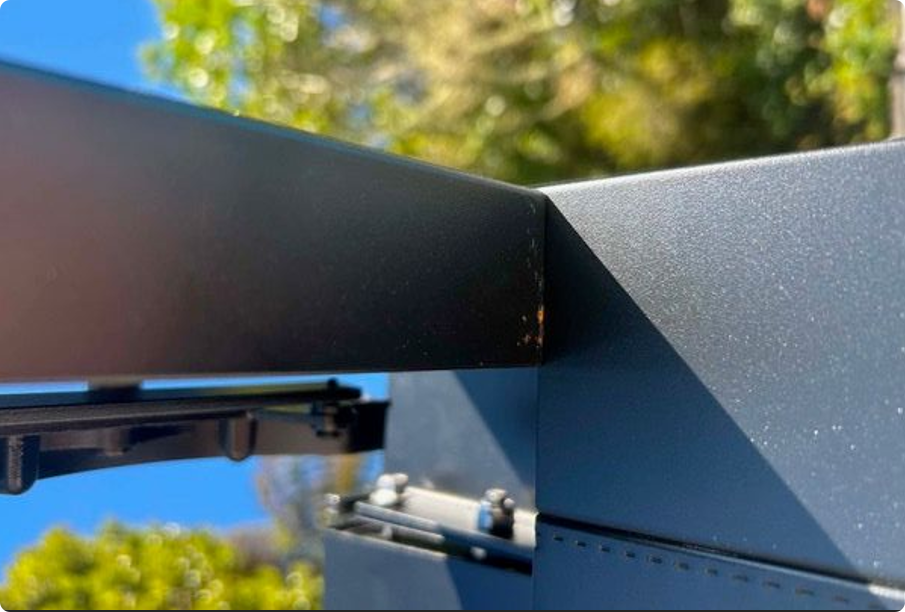
- Galvanic Corrosion Risks: Mixing aluminum frames with low-grade stainless steel or galvanized fasteners accelerates corrosion at contact points, especially in coastal environments. Use matching fastener grades or insulating nylon washers.
- Separate Electrical Circuits: Do not run LED lights and louver motors off a single transformer. If one fails, the whole system shuts down.
- Powder Coating Durability: Ask for architectural-grade powder coatings (such as PVDF or ultra-durable polyester standards). Standard coatings may begin chalking and fading within two to three years under heavy UV exposure.
- ZIP Screen Fabric Selection: Choose UV-resistant, mildew-proof, and washable outdoor-grade fabrics rather than standard shade cloth.
Preguntas Frecuentes (PF)
Q1: Why does my louvered pergola still leak when the roof is closed?
This is usually caused by lack of internal gutters or wind-driven rain seeping through edges. A closed louver roof requires an integrated gutter and internal post drainage system to redirect water effectively.
Q2: Can LED lights and heaters share a single transformer?
It is not recommended. Separating low-voltage lighting, motors, and high-wattage heaters onto dedicated circuits protects components and simplifies maintenance.
Q3: Can strong winds damage ZIP side screens?
Quality ZIP screens feature side-rail tensioning built to withstand normal winds. However, because they act as wind barriers, structural engineering limits must be verified for wind gusts exceeding 40 MPH.
Q4: What should be considered for coastal, high-salt environments?
Use 316/A4 stainless steel fasteners, ultra-durable architectural powder coatings, higher IP-rated electrical components, and salt-spray-resistant aluminum alloys.
Q5: Is it feasible to retrofit a motorized louvered roof later?
Retrofitting is difficult and costly if structural load-bearing and internal wiring channels were not reserved during initial fabrication. Roof systems should always be finalized prior to manufacturing.
Conclusión
An aluminum pergola is more than just outdoor furniture—it is an extension of your outdoor living space. Choosing the right foundation and accessories turns it into a functional area you will use year-round.