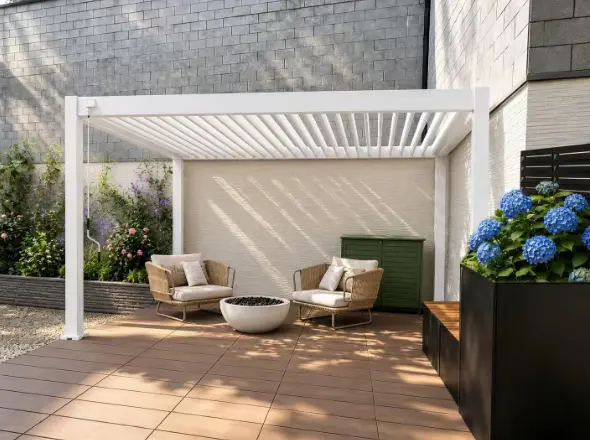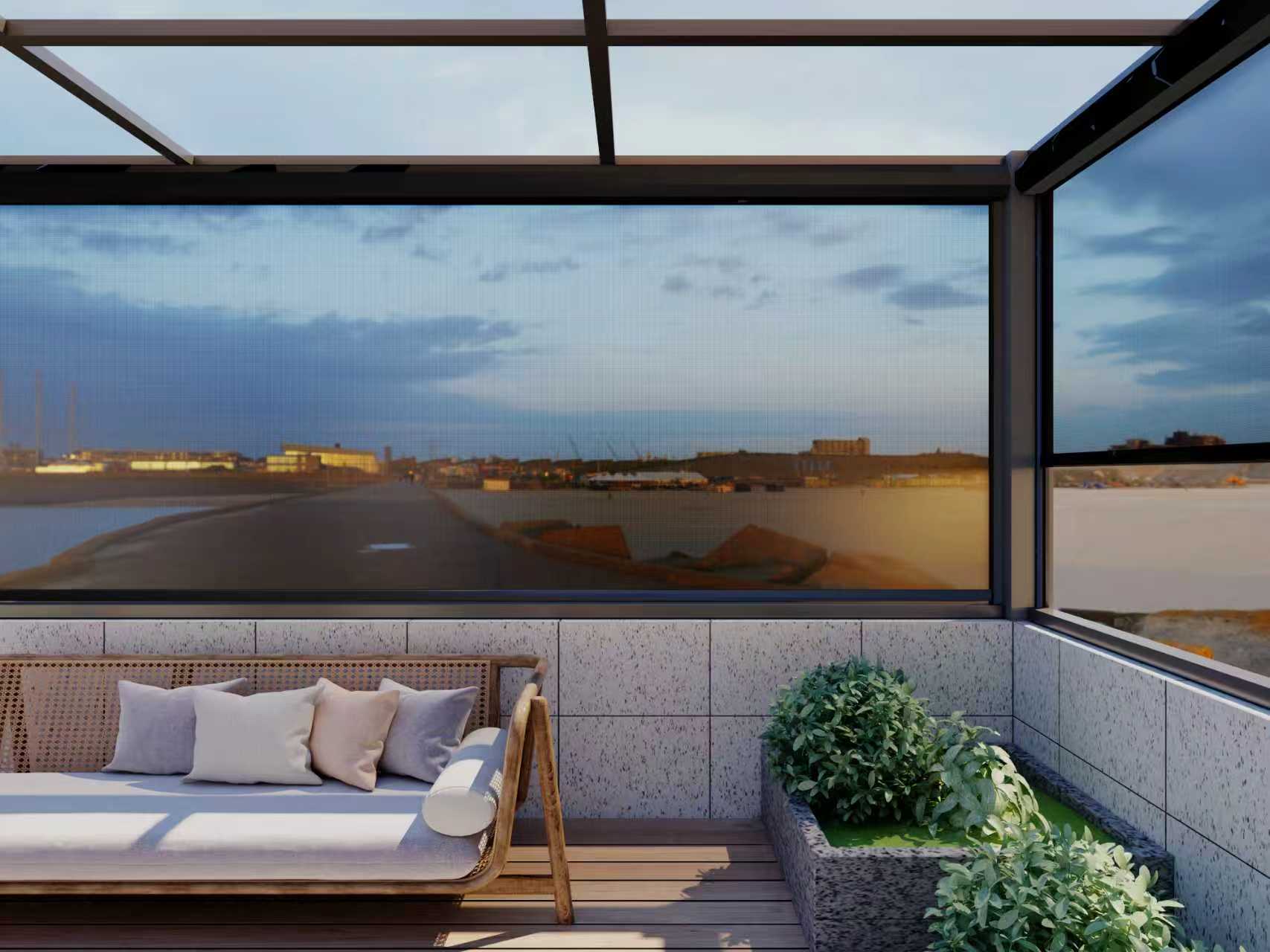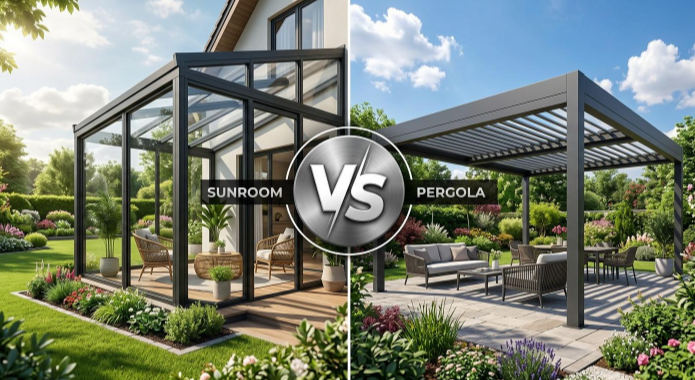



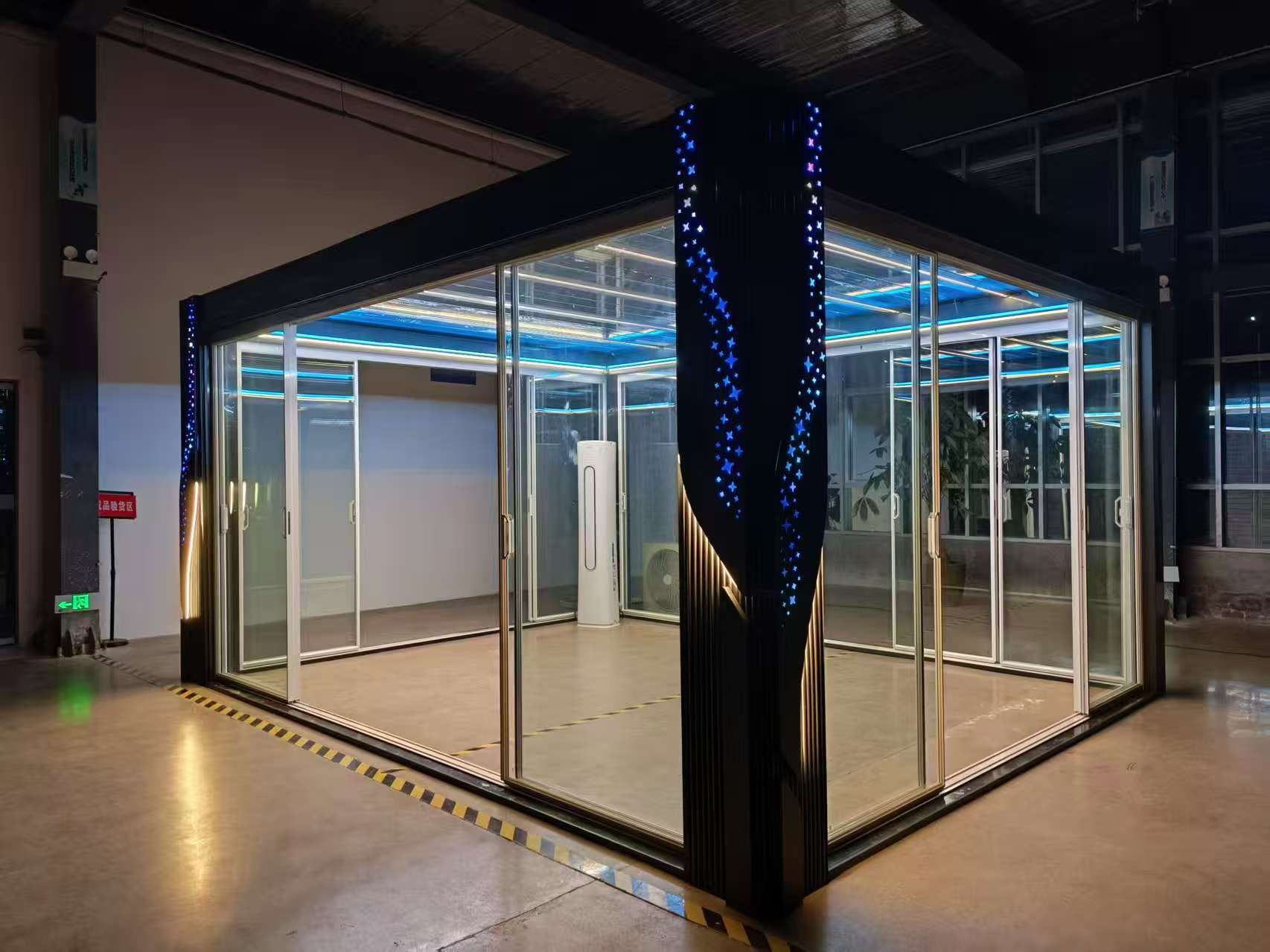
Con los avances de la moderna tecnología de la construcción, las pérgolas de aluminio se han hecho cada vez más populares en el sector de la construcción por su ligereza, alta resistencia y propiedades anticorrosivas. Su excepcional resistencia a terremotos y vientos las hace ideales para zonas propensas a catástrofes, como zonas sísmicas y regiones costeras afectadas por tifones. Este artículo explora las capacidades antisísmicas y de resistencia al viento de las pérgolas de aluminio, profundizando en sus principios técnicos, aplicaciones prácticas y tendencias futuras.
1. Resistencia sísmica de las pérgolas de aluminio
1.1 Ligero y resistente, reduce la inercia sísmica
El aluminio tiene una densidad de un tercio de la del acero, pero gracias a la tecnología de aleaciones (por ejemplo, 6061-T6, 6063-T6), su resistencia puede superar los 300 MPa. Durante un terremoto, la fuerza de inercia de una estructura es proporcional a su masa. El diseño ligero de las pérgolas de aluminio reduce significativamente el impacto sísmico, minimizando el riesgo de colapso debido a un peso excesivo.
1.2 Diseño estructural flexible, absorción de la energía sísmica
Las pérgolas de aluminio suelen utilizar estructuras de marcos o muros cortantes con conexiones flexibles (por ejemplo, cojinetes sísmicos, juntas elásticas), lo que permite que el edificio se deforme moderadamente bajo las ondas sísmicas, absorbiendo y disipando la energía en lugar de resistirla rígidamente. Por ejemplo, Japón utiliza ampliamente estructuras de aleación de aluminio en edificios sísmicos, consiguiendo una resistencia a los terremotos de hasta una magnitud 8 o superior.
1.3 Montaje modular, mejora de la estabilidad general
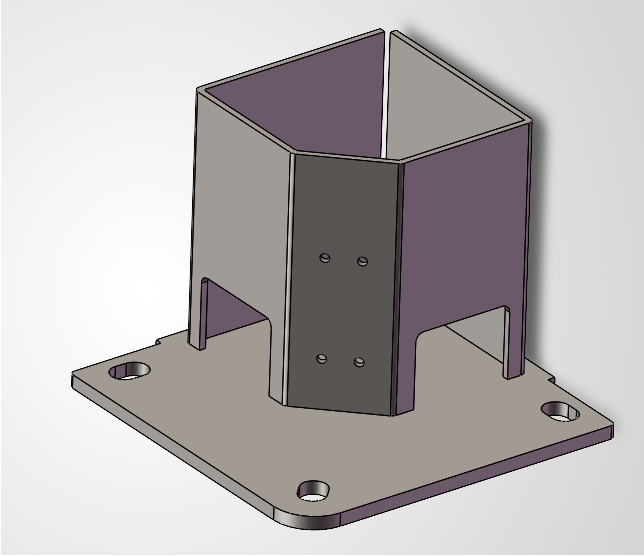
Las pérgolas de aluminio utilizan componentes prefabricados conectados con pernos o soldaduras de alta resistencia para garantizar la integridad estructural. El diseño modular no solo mejora la eficiencia de la construcción, sino que también permite reparar o sustituir rápidamente las piezas dañadas tras un terremoto, lo que reduce los costes de reconstrucción tras la catástrofe.
2. Resistencia al viento de las pérgolas de aluminio
2.1 Diseño de alta presión del viento, resistente a vientos fuertes
La resistencia al viento de las pérgolas de aluminio depende de las secciones de los perfiles, los métodos de conexión y las técnicas de tratamiento de las superficies. Por ejemplo:
- Optimización del perfil: Utilizando paneles de aluminio engrosados (≥1,8 mm) o chapas de aluminio perforadas, optimizados mediante análisis de elementos finitos, se consigue una resistencia a la presión del viento superior al nivel 12.
- Conexiones reforzadas: Los pernos de alta resistencia o los clips ocultos evitan que los paneles se desprendan con vientos fuertes.
2.2 Estanqueidad e impermeabilización, afrontar condiciones meteorológicas extremas
Las pérgolas de aluminio emplean múltiples bandas de sellado (por ejemplo, caucho EPDM) y adhesivos impermeables para garantizar que no haya fugas de agua durante los tifones o las lluvias torrenciales. Por ejemplo, una estructura de aluminio en un centro turístico de Guangdong resistió un tifón de categoría 16 sin sufrir daños.
2.3 Pruebas en túnel aerodinámico y certificación de normas
Las normas internacionales de resistencia al viento (por ejemplo, ASTM E330) exigen que las estructuras de aluminio no se deformen más de 1/150 bajo la presión simulada del viento. Las pérgolas de aluminio se validan mediante ensayos en túnel de viento y simulaciones numéricas para confirmar su resistencia al viento.
3. Aplicaciones prácticas de las pérgolas de aluminio
- Centros turísticos: Una zona paisajística de Yunnan utiliza pérgolas de aluminio como casas de vacaciones, resistentes a terremotos de magnitud 8 y vientos de categoría 16, adecuadas para climas montañosos.
- Reconstrucción tras la catástrofe: Tras las graves inundaciones de Yueyang, se eligieron estructuras de cizallamiento con marcos de aluminio para la reconstrucción, debido a su superior impermeabilidad y comportamiento sísmico.
- Edificios comerciales: Las estructuras de aluminio de la serie ALPOD de Hong Kong sirven como salas de exposiciones temporales, con diseños modulares que permiten desmontarlas y reubicarlas rápidamente.
4. Tendencias futuras
- Sistemas sísmicos inteligentes: Integración de sensores para supervisar la deformación estructural en tiempo real, proporcionando alertas tempranas de riesgos sísmicos.
- Integración de la construcción ecológica: Con una tasa de reciclado del aluminio superior a 95%, su combinación con cubiertas fotovoltaicas consigue un consumo energético cero.
- Aplicaciones en altura: Desarrollo de marcos de aleación de aluminio de alta resistencia para superar las limitaciones de los edificios residenciales de más de 10 pisos.
Las pérgolas de aluminio, con sus ventajas de ligereza, antisísmicas y resistentes al viento, están sustituyendo gradualmente a los edificios tradicionales de ladrillo y hormigón. A medida que evolucione la tecnología, se convertirán en un modelo de construcción futura segura, ecológica y sostenible. Para los residentes en zonas sísmicas o costeras, las pérgolas de aluminio no sólo son estéticamente agradables, sino también una sólida salvaguarda para la vida y la propiedad.
Referencias:
- Alianza para la construcción ligera ecológica, 2019
- Grupo YASHE, 2025
- Investigación sobre el panel de aluminio perforado de Beibei, 2024
- Pruebas de paneles de aluminio perforado de Shandong, 2024
- Análisis sísmico de la estructura de aluminio de Pengpai, 2025
- Informe sobre la resistencia a los desastres de las estructuras de cizalladura de aluminio, 2025
- Estudio de resistencia al viento de los paneles de aluminio de Xinzhou, 2023
- Normas para ventanas residenciales altas de aleación de aluminio, 2024
- Pruebas de presión del viento en ventanas de perfil de aluminio, 2023