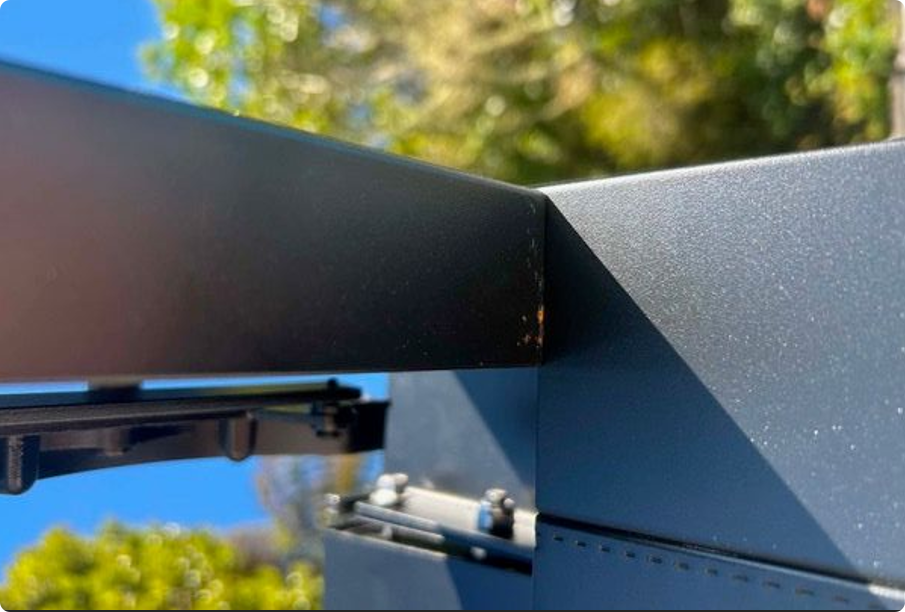


Vous êtes-vous déjà arrêté pour réfléchir, lorsque vous décidez enfin d'installer une pergola en aluminium dans votre jardin ou pour un projet commercial, en attendant un style de vie moderne, écologique et nécessitant peu d'entretien, pour la voir se déformer après une tempête, se décolorer en quelques mois, voire dégager une odeur étrange ?
À ce moment-là, regrettez-vous de ne pas avoir prêté plus d'attention à la qualité dès le départ ?
C'est précisément le casse-tête principal d'innombrables importateurs :
La qualité et la fiabilité des pergolas en aluminium peuvent-elles vraiment être fiables ?
Cet article aborde cette question de front et vous aide à comprendre clairement ce qui sépare un achat judicieux d'une erreur coûteuse.
Quelle valeur tirerez-vous de cet article ?
A Cadre d'évaluation complet, étape par étape, de 0 à 1.
Aucun blabla, juste des informations pratiques. De la sécurité des matériaux et de la durabilité structurelle à la sélection des fournisseurs, des applications concrètes, des listes de contrôle exploitables et des techniques de niveau expert. De plus, une section FAQ pour répondre à vos préoccupations.
À la fin, vous serez en mesure d'évaluer les fournisseurs en toute confiance, de contrôler la qualité des produits et d'éviter que de mauvaises fabrications ne nuisent à la réputation de votre marque.
Le principe fondamental : Trois piliers de la qualité et de la fiabilité
Les pergolas en aluminium sont commercialisées comme “ saines + durables ”, mais seulement lorsqu'elles tiennent vraiment leurs promesses. Ces trois piliers sont non négociables :
1. Sécurité des matériaux : Zéro formaldéhyde, faibles métaux lourds, aucun risque cancérogène
Pergolas en aluminium de haute qualité utilisent alliages d'aluminium de qualité aérospatiale (par exemple, 6063-T5), qui naturellement ne contiennent pas de formaldéhyde.
Cependant, des risques peuvent survenir revêtements en poudre ou matériaux de toiture composites, qui peut émettre des COV (composés organiques volatils).
C'est pourquoi les importateurs devraient toujours demander :
- Rapports de test RoHS, REACH et SGS
- Vérification que les métaux lourds (plomb, cadmium, etc.) sont bien en deçà des limites locales
Dans des marchés comme l'Australie, les normes sont encore plus strictes, exigeant des revêtements à très faibles émissions de COV (équivalents aux niveaux F4-étoiles).
Les produits de faible qualité utilisent souvent de l'aluminium recyclé ou des revêtements bon marché, qui peuvent libérer des substances nocives au fil du temps, sapant complètement la revendication “ écologique ”.
2. Durabilité structurelle : performance au vent, sismique et thermique
Une pergola fiable doit résister aux extrêmes environnementaux locaux :
- Résistance au vent : 100–220 km/h
- Charge de neige : 60–80 cm
- Résistance aux UV : Pas de décoloration pendant plus de 20 ans
- Résistance à la corrosion : Surtout dans les zones côtières
La norme de référence :
- Épaisseur de la poutre maîtresse et du poteau ≥ 3,0 mm
L'isolation thermique et l'étanchéité dépendent de la conception du toit (volets motorisés ou panneaux en polycarbonate).
Assurez-vous que les produits sont soutenus par :
- Tiers essais en soufflerie
- Tests au brouillard salin pour la résistance à la corrosion
Ce n'est qu'ainsi qu'ils pourront fonctionner de manière fiable dans les régions côtières, les zones sismiques ou les climats rigoureux.
3. Sélection du fournisseur : Évitez la “ Fabrication de faible qualité ”, choisissez un contrôle qualité de précision
La recherche montre que près de 70% des importateurs citent les problèmes de qualité comme leur plus grande préoccupation.
De nombreuses usines affirment être certifiées ISO9001, pourtant elles rognent sur la qualité avec de l'aluminium recyclé fin ou des processus simplifiés.
Un fournisseur fiable doit mettre en œuvre contrôle qualité au niveau micro, incluant :
- Sélection rigoureuse des matières premières
- Inspection du processus à chaque étape
- Élimination des composants de qualité inférieure
Travaillez uniquement avec des fabricants détenant des certifications telles que :
- CE, UL, TÜV
- Certifications de revêtement en poudre de qualité marine
C'est la seule façon d'éviter les retours en masse – ou pire, de nuire à la marque.
Guide basé sur des scénarios : Qu'est-ce qui compte dans différents cas d'utilisation ?
- Aires de loisirs résidentielles
Concentrez-vous sur la sécurité et l'esthétique.
En Australie, les clients privilégient la conformité RoHS et les revêtements qui ne s'estompent pas pendant 20 ans, ce qui est particulièrement important pour la sécurité des enfants. - Projets commerciaux (hôtels, centres de villégiature)
La performance structurelle est essentielle.
La certification CE et les rapports de charge de vent sont essentiels pour l'approbation du projet dans l'UE. - Importation transfrontalière (États-Unis/Australie)
Préoccupé par la perception du “Made in China” ?
Choisir des usines avec Certifications UL ou équivalentes locales pour être en ligne avec les attentes du marché. - Environnements extrêmes (zones côtières/ventées)
Prioriser :- Revêtement en poudre de qualité marine
- Profilés en aluminium épais
- Prouvé Résistance à la brume saline de plus de 1000 heures
Liste de contrôle pratique : Ce que vous pouvez faire dès maintenant
- Demande de rapports d'essai
- Inspection par un tiers (SGS/Intertek)
- Niveaux de COV inférieurs aux limites locales
- Conformité RoHS
- Certification de charge de vent
- Inspection d'usine (sur site ou par vidéo)
- Vérifiez les matières premières (aluminium primaire vs recyclé)
- Mesurer l'épaisseur de la paroi (≥ 3 mm)
- Confirmer le processus de revêtement en poudre (électrostatique, pas peinture en spray)
- Commencez par une commande d'essai
- Commander 1–2 unités
- Test sur 6 mois en conditions réelles
- Recueillir les commentaires des utilisateurs
- Penser au-delà du prix unitaire
Calculer le coût total du cycle de vie :
Une pergola de haute qualité peut coûter 10 à 20% de plus au départ, mais elle offre 20 ans de performances sans entretien, surpassant de loin les alternatives moins chères.
Aperçus avancés : Évaluation de niveau expert
- Technologie des matériaux et des revêtements
aluminium 6063-T5 + revêtement en poudre polyester de qualité marine
A résisté aux tests de brouillard salin et de vieillissement accéléré QUV pour une durabilité de 20 ans - Génie des structures
Les fournisseurs professionnels fournissent :- Calculs de charge de vent/neige
- Analyse par éléments finis
- Conformité à l'Eurocode ou à l'AS1170
- Boucle de durabilité
L'aluminium est recyclable à 100 %%.
Les usines de premier plan atteignent désormais :- Production à faible émission de carbone
- Conformité REACH complète
- Durabilité véritable en boucle fermée
FAQ
Q1 : Les pergolas en aluminium sont-elles vraiment exemptes de formaldéhyde ?
A : La structure en aluminium elle-même est totalement exempte de formaldéhyde. Les risques proviennent des revêtements – choisissez des produits certifiés RoHS/REACH pour garantir des émissions de COV minimales, souvent inférieures à celles des pergolas en bois.
Les fournisseurs chinois peuvent-ils vraiment garantir la qualité ?
Le marché est mitigé. Mais en sélectionnant des usines de premier ordre (certifiées UL/CE, matériaux épais, revêtements marins) et en appliquant un contrôle qualité rigoureux, les risques peuvent être minimisés.
Q3 : Qu'en est-il des typhons ou des tremblements de terre ?
Vérifiez les certifications de charge de vent et la conception structurelle. Les pergolas en aluminium de haute qualité sont conçues pour dépasser les structures en bois standard.
Q4 : Comment évaluer la durabilité d'un revêtement ?
A: Requête :
- Garantie de 20 ans
- Rapports de tests QUV et de brouillard salin
Ceux-ci garantissent une stabilité des couleurs à long terme et une résistance à la corrosion.
Réflexions finales : choisir la bonne pergola, c'est choisir le bon avenir
La qualité et la fiabilité d'une pergola en aluminium déterminent si elle devient un mise à niveau écologique — ou une leçon coûteuse.
En appliquant les principes et les méthodes ci-dessus, vous pouvez éviter 99% des écueils courants, protéger votre marque et proposer à vos clients un produit véritablement durable et de haute qualité.
Si vous recherchez un fournisseur fiable de pergolas en aluminium ou si vous avez besoin d'un rapport d'évaluation de qualité personnalisé, n'hésitez pas à nous contacter. Notre équipe peut vous mettre en relation avec des fabricants de premier plan rigoureusement sélectionnés, vous aidant ainsi à transformer la “ durabilité ” en une valeur réelle et réalisable.
Installons une pergola dans votre jardin qui soit non seulement belle, mais aussi conçue pour durer.