Key takeaway: short-term pressure but limited downside; the longer-term outlook hinges on energy costs and demand dynamics.
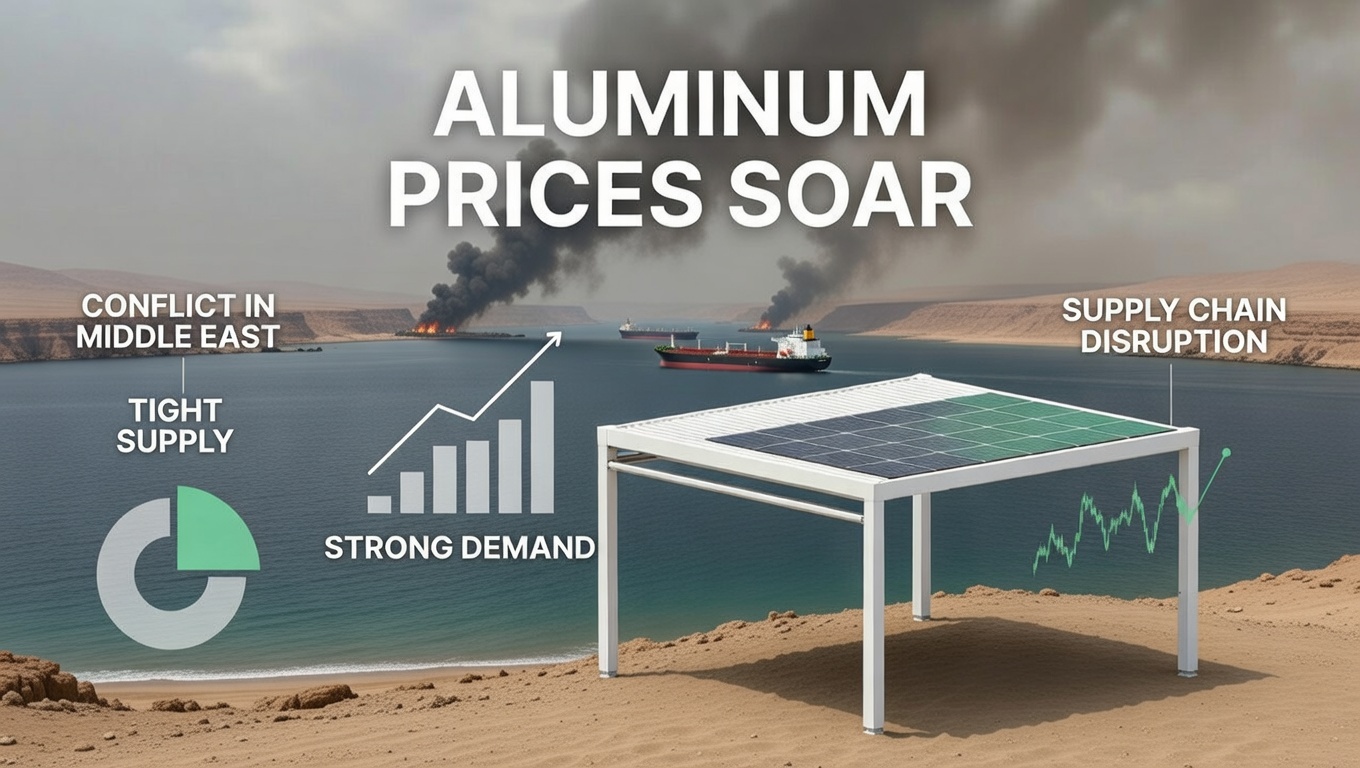
At present (2026), the broad market view is that aluminium prices may experience some volatility and modest pullbacks over the next one or two quarters, mainly due to macroeconomic pressures and a gradual recovery in supply. However, the room for a sharp decline appears limited. Over the longer term, energy costs and the pace of demand recovery in China will remain the main forces shaping the market. In all likelihood, prices will not return to the very low levels seen in earlier years.
Key Factors Influencing Aluminium Prices
1. Supply Side (the main determinant of the price floor)
Energy costs (the most critical factor)
Primary aluminium is often described as “solid electricity”. Producing one tonne of aluminium requires roughly 13,500 kWh of power, with electricity accounting for 35–40% of total production costs.
- Energy prices in Europe and North America:
If natural gas and electricity prices remain elevated, high-cost smelters in these regions will continue to face the risk of output cuts, tightening global supply. - Hydropower-based aluminium in China:
Production capacity in provinces such as Yunnan and Sichuan is highly sensitive to seasonal water levels. Dry and wet seasons can therefore create noticeable seasonal fluctuations in output and prices.
China’s capacity ceiling
China has imposed a production cap of around 45 million tonnes for primary aluminium. Future supply growth will largely rely on recycled aluminium, effectively limiting supply elasticity from the world’s largest producer.
Geopolitics and trade policy
Political developments and export policies in major producers such as Guinea y Australia, along with sanctions on Russian aluminium from Western economies, can all disrupt the global supply chain.
2. Demand Side (the driver of price momentum)
Global macroeconomic conditions
Expectations of economic slowdown tend to suppress demand for industrial metals. Monetary policy decisions by the US Federal Reserve—particularly interest rate moves—directly influence the US dollar and global investment sentiment.
Long-term “green demand”
This is perhaps the most compelling long-term support for aluminium prices. Demand from sectors such as electric vehicles (light-weighting), solar power (frames and mounting systems), and ultra-high-voltage power grids (conductors) is growing far faster than traditional sectors like construction and property development.
China’s property and infrastructure sectors
These have historically been major consumers of aluminium. While weakness in property markets weighs on demand, growth in green-transition industries is gradually offsetting part of that decline.
3. Inventory and Financial Factors
Global visible inventories
Low stock levels on exchanges such as the London Metal Exchange (LME) and the Shanghai Futures Exchange (SHFE) tend to provide strong support for prices.
US dollar strength
As aluminium is priced in dollars, a stronger dollar generally exerts downward pressure on commodity prices.
Speculative capital
Positioning by investment funds can amplify price movements, increasing short-term volatility.
Market Situation in 2026 and the Outlook Ahead
Factors supporting prices (limiting sharp declines)
- Higher structural energy costs
The global energy transition and geopolitical tensions mean electricity prices—particularly in Europe—are unlikely to return to previous lows. High-cost producers therefore act as marginal suppliers, effectively lifting the global cost curve. - Low inventories
Visible global inventories have remained relatively low for an extended period, suggesting that supply and demand are not fundamentally loose. - Steady growth in green-energy demand
Despite economic fluctuations, the expansion of renewable energy and electrification remains a clear long-term trend.
Factors creating downward pressure
- Concerns over economic slowdown
A recession across major economies would weaken demand for all industrial metals. - Partial recovery of supply
As energy prices retreat from extreme highs, some European smelters that previously curtailed production may gradually restart. Meanwhile, output in southwest China often increases during the wet season. - Weakness in traditional demand
Continued softness in China’s property sector dampens market optimism.
Overall Assessment and Practical Considerations
1. Potential window for price pullbacks
Price pressure is likely to be strongest when negative macroeconomic signals coincide with short-term supply increases. For example, weaker economic data in Europe and the US combined with the wet-season recovery of aluminium production in southwest China could create a period of stronger downside pressure within the coming six months.
2. Identifying the likely price floor
Aluminium prices are strongly supported by production costs. In China’s primary aluminium sector:
- Cash cost: roughly RMB 16,000–17,000 per tonne
- All-in cost: roughly RMB 17,000–18,000 per tonne
When market prices approach the full cost level, higher-cost producers face losses, increasing the likelihood of output cuts and creating strong support for prices. Even if prices retreat, a sustained break below this cost range appears unlikely.
3. Practical suggestions
If you are an end user (for instance, a manufacturer of outdoor structures such as pergolas):
- Avoid betting on a single price direction. Waiting for the absolute bottom is risky, as the probability of a deep drop is limited.
- Adopt a staggered purchasing strategy. Buying in batches when prices approach cost-support levels can help average out procurement costs.
- Consider mixed pricing agreements. Combining fixed and floating pricing mechanisms in long-term contracts with suppliers can help manage volatility.
- Optimise design and inventory management. Reducing aluminium usage through design improvements and better stock control can help offset material price fluctuations.
If you are an investor:
Key indicators worth monitoring include:
- China’s social aluminium inventory levels
- LME inventory levels
- European natural gas TTF prices
- Rainfall and hydropower output in Yunnan
- Monthly production data for solar PV and electric vehicles in China
Price declines, if they occur, are more likely to appear as gradual or step-like corrections rather than a sudden collapse.
Reflexiones finales
Any “decline” in aluminium prices is more likely to be a correction within a structurally higher price range compared with the period before 2020. The fundamental driver of the market has shifted away from the old China property cycle towards global energy costs and the green-energy transition.
When making purchasing or investment decisions, it is therefore more practical to focus on industry fundamentals and cost tolerance, rather than attempting to pinpoint the exact turning point in prices.