


1. Thinking About Starting a Pergola Business? Here’s Where to Begin
Have you ever noticed how outdoor living spaces are becoming increasingly popular? From residential patios and backyard gardens to restaurants, hotels, and commercial terraces, more people are investing in outdoor spaces that are both functional and visually appealing.
And perhaps you’ve wondered: Could starting a pergola business be a profitable opportunity for me?
You may have already researched different pergola designs, browsed manufacturer websites, or contacted a few suppliers. But what comes next?
Should you manufacture your own products or purchase from an established factory? Should you sell directly to homeowners or focus on wholesale distribution? Can you enter this industry without installation experience?
These are important questions to answer before getting started.
The good news is that you don’t necessarily need your own factory, a large showroom, or a professional installation team to enter the pergola industry.
You can start as a reseller, wholesaler, distributor, trading company, or local project partner. As your business grows, you can gradually expand your product range, customer base, and operations.
The key is not to start big, but to start with the right business model and build a reliable system for attracting customers and generating profits.
In this guide, we’ll walk you through the essential steps, from market research and product selection to supplier sourcing, customer acquisition, pricing, and sales.
2. Step One: Research the Market and Identify Your Target Customers
Before purchasing products, you need to understand who your potential customers are.
Pergolas serve different markets, and each customer group has its own purchasing priorities, budgets, and expectations.
2.1 Understand the Main Pergola Market Segments
Residential Market
Residential customers include:
- Homeowners with gardens, patios, and backyards
- Home renovation companies
- Outdoor living contractors
- Landscape designers
- Swimming pool and patio specialists
These customers typically care about product appearance, dimensions, available features, installation requirements, and overall project costs.
Commercial Market
Commercial customers include:
- Restaurants and cafes
- Hotels and resorts
- Commercial property developers
- Outdoor dining contractors
- Architects and commercial design companies
Their priorities often include structural durability, weather resistance, customization capabilities, project requirements, and long-term maintenance.
Wholesale and Distribution Market
Wholesale buyers and business partners include:
- Building material wholesalers
- Outdoor furniture distributors
- Local pergola brands
- E-commerce sellers
- Importers and regional distributors
These buyers are generally more interested in wholesale pricing, minimum order quantities (MOQ), product quality, delivery times, packaging, and long-term supply reliability.
2.2 Which Market Should You Target?
You don’t need to serve every customer segment from day one.
Choose your target market based on your available resources, experience, and business goals.
| Customer Type | Main Opportunity | Key Consideration |
|---|---|---|
| Retail customers | Potentially higher profit per unit | Higher marketing and after-sales costs |
| Local installers | Potential for recurring project orders | Requires technical support |
| Distributors | Opportunities for repeat purchases | Competitive wholesale pricing |
| Importers | Potentially larger order volumes | Strong supply chain and delivery capabilities |
| E-commerce sellers | Access to online sales channels | Standardized products and logistics |
Our recommendation for beginners: If you don’t have your own manufacturing facility or installation team, consider starting with wholesale, distribution, or trading.
You can source products from established manufacturers, manage sales and customer relationships, and work with local installation partners when needed.
3. Step Two: Choose the Right Pergola Products for Your Business
Once you understand your target market, the next step is choosing the right products.
Pergolas come in different materials, structures, and configurations. Each product type serves different customer needs and price segments.
3.1 Explore the Main Types of Pergolas
Aluminum Pergolas
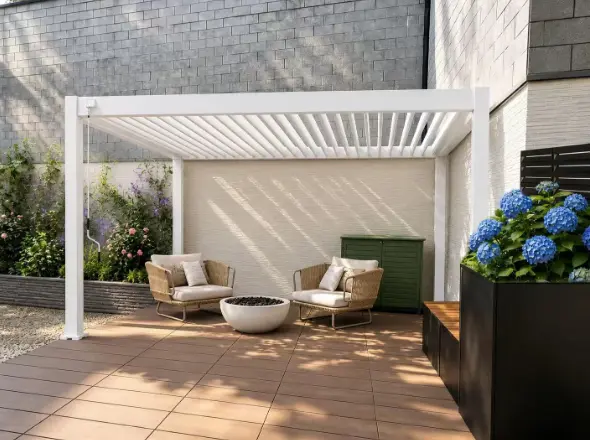
Aluminum pergolas are an important product category in the outdoor living market.
Key advantages include:
- Modern and minimalist designs
- Corrosion-resistant materials
- Relatively low maintenance requirements
- Suitable for residential and commercial applications
- Compatible with motorized louvers, LED lighting, and side accessories
They are particularly suitable for customers looking for modern outdoor living solutions with flexible configurations.
Image suggestion: A modern aluminum louvered pergola installed in a residential backyard.
Steel Pergolas
Steel pergolas can be suitable for customers who prioritize specific structural designs and cost requirements.
Key considerations include:
- Flexible structural design options
- Different load-bearing configurations
- Applications in residential and commercial projects
- Various surface treatments and corrosion protection options
When sourcing steel pergolas, pay particular attention to welding quality, protective coatings, corrosion resistance, and verified structural performance.
Motorized Louvered Pergolas
Motorized louvered pergolas are a popular premium product category worth exploring.
Key features include:
- Adjustable louvers for flexible shading
- Motorized operation
- Integrated drainage systems
- Optional rain and wind sensors
- Smart controls and lighting options
Customers can adjust the louvers according to sunlight, weather conditions, and their outdoor activities.
Image suggestion: A comparison showing motorized pergola louvers in open and closed positions.
Retractable Pergolas
Retractable pergolas are designed for customers who want more flexibility in controlling their outdoor coverage.
Depending on the design, these systems may feature retractable roofs or other movable shading structures.
They can be suitable for patios, restaurants, cafes, and commercial outdoor spaces.
3.2 Look Beyond Appearance: Understand the Technical Specifications
Before purchasing any pergola product, make sure you understand its key specifications.
Important details include:
- Materials: Aluminum, steel, or mixed-material structures.
- Profile Specifications: Post and beam dimensions, wall thickness, and material grades.
- Surface Treatment: Powder coating and corrosion protection.
- Louver Design: Single-layer or double-layer louvers and rotation angles.
- Drainage System: Integrated gutters and internal post drainage.
- Motor System: Motor brand, operating method, and maintenance requirements.
- Wind and Snow Load: Verified performance under specified testing conditions.
- Accessories: Zip screens, glass sliding doors, LED lighting, and other optional features.
Don’t rely solely on promotional claims about maximum wind resistance or snow load capacity. Ask manufacturers for relevant test reports, technical specifications, and installation requirements.
3.3 Which Products Should Beginners Start With?
Instead of purchasing dozens of models, start with two or three core product ranges.
For example:
- Entry-Level Series: Basic aluminum pergolas with manual or standard configurations.
- Main Product Series: Motorized aluminum louvered pergolas.
- Premium Series: Motorized pergolas with zip screens, LED lighting, and glass sliding doors.
This approach allows you to serve different customer budgets while keeping product sourcing, inventory, and marketing manageable.
4. Step Three: Find Reliable Pergola Manufacturers and Suppliers
If you are not a manufacturer yourself, your supply chain will be one of the most important parts of your business.
Product quality, purchasing costs, production schedules, and after-sales support all directly affect your profitability and customer satisfaction.
4.1 Where Can You Find Pergola Suppliers?
Here are several channels worth exploring:
- Google: Search for terms such as Pergola Manufacturer, Pergola Factory, and Aluminum Pergola Supplier.
- Alibaba: Discover manufacturers with export experience and wholesale capabilities.
- Global Sources: Find specialized outdoor product suppliers.
- Industry Trade Shows: Meet manufacturers, inspect products, and establish business relationships.
- Industry Networks: Ask local distributors and business partners for supplier recommendations.
4.2 How to Evaluate a Reliable Pergola Manufacturer
Don’t choose a supplier based on price alone. Evaluate the following areas.
Manufacturing Capabilities
- Does the company operate its own factory?
- Does it have stable production equipment and quality control procedures?
- Does it have experience exporting to international markets?
- Can it provide OEM and ODM services?
Product Quality
- Are detailed technical specifications available?
- Can the manufacturer provide material information and test reports?
- Does it have a quality inspection process?
- Can it provide real project references?
Business Cooperation Terms
- What is the minimum order quantity?
- Are mixed-model orders accepted?
- Can product dimensions and colors be customized?
- What is the production lead time?
- Are installation manuals and technical support available?
- How are quality issues handled?
4.3 Test Products Before Placing Large Orders
Whenever possible, purchase a sample or display unit before committing to a large order.
Check the following:
- Profile thickness and surface finish
- Smoothness of louver operation
- Motor performance and stability
- Drainage design
- Completeness of accessories
- Installation difficulty
For a structural product like a pergola, actual product performance matters much more than attractive promotional photos.
5. Step Four: Calculate Your Costs and Build a Profitable Pricing Strategy
One common mistake beginners make is focusing only on the manufacturer’s quotation while overlooking shipping, taxes, warehousing, installation, and after-sales expenses.
You may receive orders but still struggle to generate a healthy profit if these costs are not properly calculated.
5.1 Calculate the Total Cost of Each Pergola
Create a detailed cost sheet covering:
| Cost Category | What to Include |
|---|---|
| Product Cost | Main structure, accessories, and motors |
| Packaging | Cartons, wooden crates, and protective materials |
| International Shipping | Sea freight, air freight, or other logistics |
| Import Expenses | Customs clearance, duties, and related charges |
| Warehousing | Storage and inventory management |
| Installation | Labor, tools, and transportation |
| Marketing | Advertising, website maintenance, and customer acquisition |
| After-Sales Reserve | Replacement parts, repairs, and warranty expenses |
Different Incoterms, such as EXW, FOB, CIF, DAP, and DDP, define different responsibilities and cost allocations.
Always make sure the quotation clearly states which costs are included and which are the buyer’s responsibility.
5.2 How to Calculate Your Profit Margin
Let’s look at a simplified example.
Suppose the total cost of one pergola is:
- Product purchase cost: $1,500
- Shipping and related expenses: $300
- Other operating costs: $200
Total Cost: $2,000
If you sell the pergola for $2,800:
Gross Profit = $2,800 – $2,000 = $800
Gross Profit Margin = $800 ÷ $2,800 × 100% = 28.6%
This is only an illustrative example. Your actual profitability should also account for fixed overhead, taxes, currency fluctuations, and potential after-sales expenses. Gross profit is not the same as net profit.
5.3 Don’t Compete on Price Alone
Instead of relying entirely on low prices, build your competitive advantage through:
- A wider and more flexible product range
- Custom dimensions and color options
- Reliable production and delivery schedules
- Installation guidance and technical documentation
- Consistent accessory availability
- Responsive after-sales support
Customers are not simply buying a product. They are buying the reliability of the entire purchasing and delivery process.
6. Step Five: Build Your Marketing Channels and Find Your First Customers
Once your products and supply chain are ready, your next priority is generating qualified leads.
For long-term growth, don’t depend on just one marketing channel.
6.1 Build a Professional Business Website
For wholesalers, distributors, and importers, your website is often one of the first places they visit when evaluating a potential supplier.
At a minimum, your website should include:
- Home: Brand introduction and key product offerings.
- About Us: Company background and factory capabilities.
- Products: Product categories and detailed specifications.
- Projects: Real installation and application cases.
- OEM/ODM: Custom manufacturing capabilities.
- Quality Control: Production standards and inspection procedures.
- Contact Us: Inquiry forms and contact information.
Avoid creating product pages that only contain a few photos and short descriptions.
A professional product page should include:
- Product dimensions and specifications
- Materials and structural details
- Main features and functions
- Available accessories
- Installation information
- OEM/ODM options
- Relevant certifications and test documentation
Most importantly, make it clear who you serve, what products you offer, and how potential customers can contact you.
6.2 Use Google to Reach Customers Actively Searching for Pergolas
Google Search is an important channel for generating international B2B inquiries.
Start by targeting keywords related to your products and business model.
| Keyword | Search Intent |
|---|---|
| Pergola Manufacturer | Looking for a manufacturer |
| Pergola Supplier | Looking for a supplier |
| Aluminum Pergola Wholesale | Wholesale purchasing |
| Pergola Factory | Looking for a factory |
| Pergola Distributor | Exploring distribution opportunities |
| Motorized Pergola Supplier | Looking for specific products |
| Pergola OEM Manufacturer | Looking for custom manufacturing |
Don’t place all your keywords into a single advertising group.
Organize campaigns according to product categories and search intent. Add negative keywords to filter out irrelevant searches such as DIY tutorials, free plans, second-hand products, and unrelated traffic.
Your landing pages should also match the keywords being targeted.
For example, someone searching for “Pergola Manufacturer” should land on a page highlighting factory capabilities, manufacturing experience, wholesale services, and OEM/ODM options—not just a general product gallery.
6.3 Build Brand Awareness Through Social Media
Different social media platforms serve different marketing purposes.
Instagram and Facebook
Ideal content includes:
- Residential patio and garden installations
- Product demonstrations
- Before-and-after outdoor transformations
- Nighttime lighting effects
- New product launches
Focus on connecting with:
- Importers
- Distributors
- Building material wholesalers
- Landscape design companies
- Construction contractors
Share product advantages, factory updates, project references, and industry insights to establish professional credibility.
YouTube
YouTube is particularly useful for more detailed product education.
Consider publishing:
- Pergola installation tutorials
- Motorized louver demonstrations
- Waterproof testing videos
- Product structure explanations
- Factory production processes
- Comparisons between different pergola models
These videos help potential customers understand your products and build confidence before requesting a quotation.
6.4 Actively Develop B2B Customers
Don’t simply wait for inquiries to arrive.
Use Google Maps, LinkedIn, and industry directories to identify potential business partners.
Prioritize:
- Local pergola distributors.
- Outdoor furniture wholesalers.
- Landscape and garden design companies.
- Swimming pool and patio contractors.
- Building material importers.
- Outdoor product e-commerce sellers.
Before contacting a potential customer, research their business and product range.
Avoid sending generic messages with dozens of product photos and price lists.
Instead, introduce relevant products, explain how you can support their business, and propose a suitable wholesale or distribution arrangement.
7. Step Six: Master Quotation and Sales Conversion
Generating inquiries is only the beginning. Your ability to turn inquiries into orders determines whether your business can grow sustainably.
7.1 Understand Customer Requirements Before Quoting
When receiving an inquiry, clarify the following details:
- What type of pergola does the customer need?
- What dimensions are required?
- Is it for a residential or commercial project?
- How many units are needed?
- Are zip screens or glass doors required?
- Where will the products be installed?
- Are custom colors necessary?
- What is the expected purchasing schedule?
These details will help you prepare a more accurate quotation and avoid unnecessary misunderstandings.
7.2 What Should a Professional Quotation Include?
A professional pergola quotation should contain:
- Product model and photos
- Product dimensions
- Materials and main configurations
- Accessories list
- Unit price and order quantity
- MOQ
- Packaging details
- Production lead time
- Incoterms
- Payment terms
- Quotation validity
For customized products, include configuration lists or technical drawings whenever possible.
This helps both parties confirm exactly what is being purchased.
7.3 Never Overlook After-Sales Support
Pergolas are structural products that require installation and long-term use.
Prepare the following materials and services:
- Product installation manuals
- Motor operation instructions
- Replacement part guides
- Warranty policies
- Common troubleshooting instructions
- After-sales contact information
Clear after-sales policies reduce purchasing concerns and help build long-term business relationships.
8. Step Seven: Take Your Business Further with Professional Knowledge
Once you have secured your first customers, start thinking about improving operational efficiency, customer retention, and profitability.
8.1 Build a Standardized Product System
Don’t start from scratch every time a customer requests a quotation.
Create a product database containing:
- Product models
- Standard dimensions
- Available colors
- Profile specifications
- Motor configurations
- Accessory combinations
- Package dimensions
- Product weight
- MOQ and lead times
Standardized product information saves time, reduces communication errors, and improves quotation efficiency.
8.2 Learn to Understand Technical Documents
If you plan to sell motorized louvered pergolas, you should understand several basic technical concepts.
BOM (Bill of Materials)
A Bill of Materials is a detailed list of all components required to manufacture a product.
For a pergola, this may include posts, beams, louvers, motors, drainage components, connectors, and other accessories.
Understanding the BOM helps you identify product configurations, compare supplier quotations, and calculate purchasing costs.
CAD Drawings
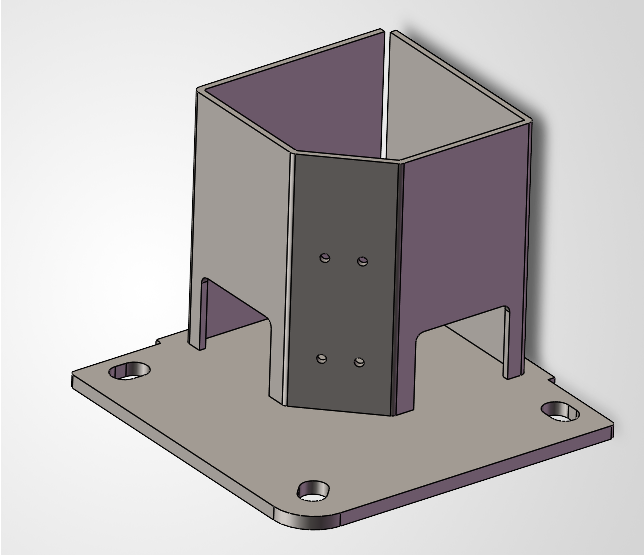
CAD drawings provide technical information about product dimensions, structural connections, installation requirements, and component positions.
They are especially important when dealing with customized projects.
Wind and Snow Load Testing
Wind and snow load testing helps evaluate the structural performance of pergolas under specified conditions.
Because climate conditions vary between countries and regions, confirm the product’s design loads, testing conditions, and intended applications before selling.
Never assume that a laboratory test result guarantees safe performance under every real-world installation condition.
Electrical and Motor Specifications
For motorized pergolas, you should also understand:
- Motor power and voltage
- Control systems
- IP protection ratings
- Sensor configurations
- Electrical safety requirements
- Local electrical installation standards
8.3 Understand Regulations and Certification Requirements in Your Target Market
If you plan to sell pergolas in Europe, the UK, or the United States, you should identify the applicable regulations and documentation requirements before entering the market.
For example:
- European Market: Determine which EU regulations apply and verify the relevant CE conformity requirements. Wireless controls may also involve additional radio equipment regulations.
- United Kingdom: Check the applicable UKCA or recognized CE conformity requirements and relevant product regulations.
- United States: Depending on product construction, electrical components, and installation location, check applicable building codes, structural requirements, and electrical standards.
Remember that product certification does not automatically replace local building permits or guarantee suitability for every wind and snow condition.
Before launching your business, request complete technical documentation from your manufacturer and consult qualified local professionals when necessary.
9. Frequently Asked Questions About Starting a Pergola Business
Q1: Can I start a pergola business without industry experience?
Yes. You don’t need to own a factory or have extensive manufacturing experience to enter the pergola industry.
You can start as a distributor, wholesaler, or trading partner by working with an experienced manufacturer.
However, you should learn the basic product specifications, installation requirements, and local market regulations before selling.
Q2: How much money do I need to start a pergola business?
There is no fixed startup budget. It depends on your business model.
A trading business may start with supplier samples, a professional website, and customer acquisition expenses.
A distributor with local inventory, a showroom, and an installation team will require significantly more investment.
Prepare a budget covering product samples, marketing, shipping, inventory, insurance, and operating expenses before launching.
Q3: Should I choose aluminum or steel pergolas?
It depends on your target customers and market positioning.
Aluminum pergolas are suitable for customers looking for modern designs, low-maintenance materials, and premium outdoor living solutions.
Steel pergolas may be suitable for customers prioritizing particular structural designs and cost requirements.
Compare material quality, corrosion protection, structural performance, and total cost before making a decision.
Q4: Where can I find reliable pergola manufacturers?
You can search on Google, Alibaba, Global Sources, and industry trade shows.
Compare manufacturers based on production capacity, product quality, customization options, certifications, MOQ, delivery times, and after-sales support.
Always verify important product claims and test samples before placing large orders.
Q5: Can I sell pergolas without providing installation services?
Yes. You can operate as a wholesale distributor or product supplier without directly installing the products.
However, providing installation manuals, technical support, and access to local installation partners can make your business more competitive.
Q6: How can I find my first pergola customers?
Start with Google Search, LinkedIn, industry directories, and local business networks.
Focus on potential buyers such as outdoor living retailers, landscape contractors, pergola installers, building material distributors, and importers.
Prepare professional product information and contact potential buyers with relevant cooperation proposals.
Q7: Is the pergola business suitable for online sales?
Yes. Pergolas can be marketed through independent websites, Google Ads, social media, and B2B marketplaces.
However, because they are relatively large and technically complex products, customers often need detailed specifications, quotations, and installation information before making a purchasing decision.
Your online marketing strategy should therefore focus on generating qualified inquiries rather than simply increasing website traffic.
Q8: What is the biggest challenge when starting a pergola business?
The biggest challenge is not simply finding a product to sell.
It is building a reliable business system that covers supplier management, product quality, customer acquisition, pricing, delivery, and after-sales service.
A good product may attract customers, but reliable operations are what turn first-time buyers into repeat customers.
10. Final Thoughts: Start Small, Build Smart, and Grow Consistently
Starting a pergola business doesn’t have to be complicated.
You don’t need to invest in a factory, purchase large quantities of inventory, or build a showroom from day one.
Start by understanding your target market, choosing the right product range, and finding a reliable manufacturing partner.
Then focus on building your customer base, improving your sales process, and developing long-term business relationships.
Remember, a successful pergola business is built on three essential foundations:
The Right Products + Reliable Suppliers + Consistent Customer Acquisition.
If you’re planning to enter the pergola market and looking for a manufacturing partner, working with an experienced factory can help simplify product sourcing and get your business started.
At WBEST, we provide pergola solutions for wholesalers, distributors, importers, and business partners. With a diverse product range, OEM/ODM support, and factory-direct cooperation, we aim to help our partners develop their businesses in the outdoor living market.
Looking for a reliable pergola supplier?
Contact our team to discuss your product requirements, wholesale opportunities, and potential cooperation.
Let’s build your pergola business together!
Website: https://wbestshade.com/
Email: info@wbestshade.com